

 What made this process truly unique was not only the research itself, but who led it.
Students were actively involved in every stage — from designing the survey and collecting data to analyzing findings and presenting the results. This created not just a study, but a space for learning, critical thinking, and meaningful engagement.
The research combined quantitative and qualitative approaches.
A total of 139 young people participated in the survey, while 5 focus group discussions with 22 participants allowed for deeper exploration of perceptions, experiences, and reflections.
But beyond the findings, the process became a platform for dialogue — something participants repeatedly emphasized as rare, yet deeply needed.
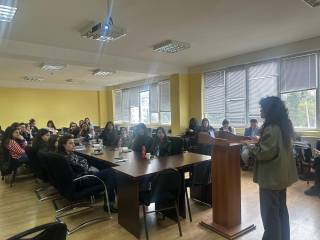
On April 23, the results were presented at Sokhumi State University to an audience of around 40 students, professors, and university representatives, including faculty leadership. The discussion that followed was dynamic and highly engaging — participants reflected on the findings, shared their own perspectives, and highlighted how much they could relate to the results.
One of the most important takeaways was this: for many participants, this was the first time they had engaged so deeply with issues related to conflict, Abkhazia, and South Ossetia in such a structured and open way.
At the same time, the experience of working together — across universities, backgrounds, and perspectives — proved just as important as the research itself. Students reflected on how building trust, even in a shared space, takes time and effort. This insight naturally led to broader reflections on dialogue and reconciliation in divided societies.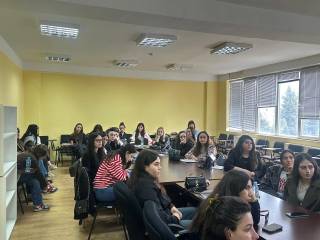
Participants also highlighted how valuable it was to be trusted with real responsibility, to be guided through the full research cycle, and to feel part of something meaningful. Many expressed a strong interest in seeing similar approaches integrated into university learning and future initiatives.
This process once again showed that when young people are given space, support, and responsibility, they do not just learn — they lead, reflect, and contribute to shaping conversations that matter.