

Many human experiences defy easy translation into language, both for the experiencer and for scientific and social-scientific analysts. In the context of health, disease, and disability, many experiences evade straight-forward measurement, and are found difficult to express, communicate or interpret. Examples include, but are not limited to emotional states, pain, “voices” and other dissociative experiences, synesthesia, hallucinations, and other non-quantifiable somatic expressions.
As Laura Stark and Nancy Campbell suggest, the usual translation of “the ineffable” into language provides a foundation for scientific analysis (2018); what Stark and Campbell identify is that what exceeds language is often left out of analysis and that the aim of psychological sciences is to translate the ineffable into quantifiable, knowable scientific data. This provides the basis for rendering some human experiences as pathological, as unknowable, and as psychosis (Bateson 2000).
Similarly, access to language is widely accepted as the basis of subjective human experience, and the transparency of language use is taken by humanists and scientists as indicative of typical forms of human consciousness (Benveniste 1973; Butler 2005; Lacan 1981). This priority of language in providing evidence of human experience is concretized by social scientific methods that rely on language—interviews, surveys, and other language-dependent methods foremost among them. Humanists and social scientists have sought to challenge these norms by attempting to broaden the methods they employ to capture diverse human experiences, including arts- and literature-based techniques.
In health-related research, methods to address these challenges have been prominently articulated by researchers working with children (Spray, Fechtel, and Hunleth 2022), and with communication-impaired adults (Wolf-Meyer 2020). In doing so, they have worked toward creating more inclusive forms of representation and engagement with communication as a human interaction.
Attention to affect has led to methods that prioritize affective experience along two lines: drawing on the work of Silvan Tompkins, scholars have sought to draw attention to the pre-discursive experience of emotions, which ultimately become coded in dominant forms of interpretation, giving language to otherwise ineffable experiences (Berlant 2011; Sedgewick and Frank 1995; Stewart 2007). Drawing on the affective monism of Baruch Spinoza (Deleuze 1988; Spinoza 2005), scholars have used affect to describe the capacities to act and be acted on, highlighting how emotion is only one mode that affect can be expressed through (Gatens 1996; Gatens and Lloyd 1999; Grosz 1995). The contemporary work in these approaches to affect draw on longstanding traditions in the social sciences that describe the variability of emotional experience (Lutz 1986; Lutz and White 1986) and provide a foundation for considering non-linguistic methodologies that make apparent other ways of being in the world.
Whereas linguistically-derived methodologies may excessively emphasize individual experience, experimental methods that attend to affective experience provide opportunities to work against phenomenological approaches that divorce the individual from their environment (Sterne 2021). Videographic methods situate individuals in their social and environmental contexts in real time, which offers an opportunity to describe complex interactions and convey affective states through visual media. Arts-based methods may provide individuals with the means to convey affective experiences in non-discursive ways, offering non-representational modes that might elude linguistic reductivism and also serve to improve communication between experiencers and their care-providers (Padfield and Zakrzewska 2021). Literature-based methods, including fiction and poetry writing, allow for forms of semiological practice that work against easy linguistic interpretation. In each of these modes—and other experimental methods—individual experience exceeds staid methodologies that prioritize linguistic referentiality and transparency.
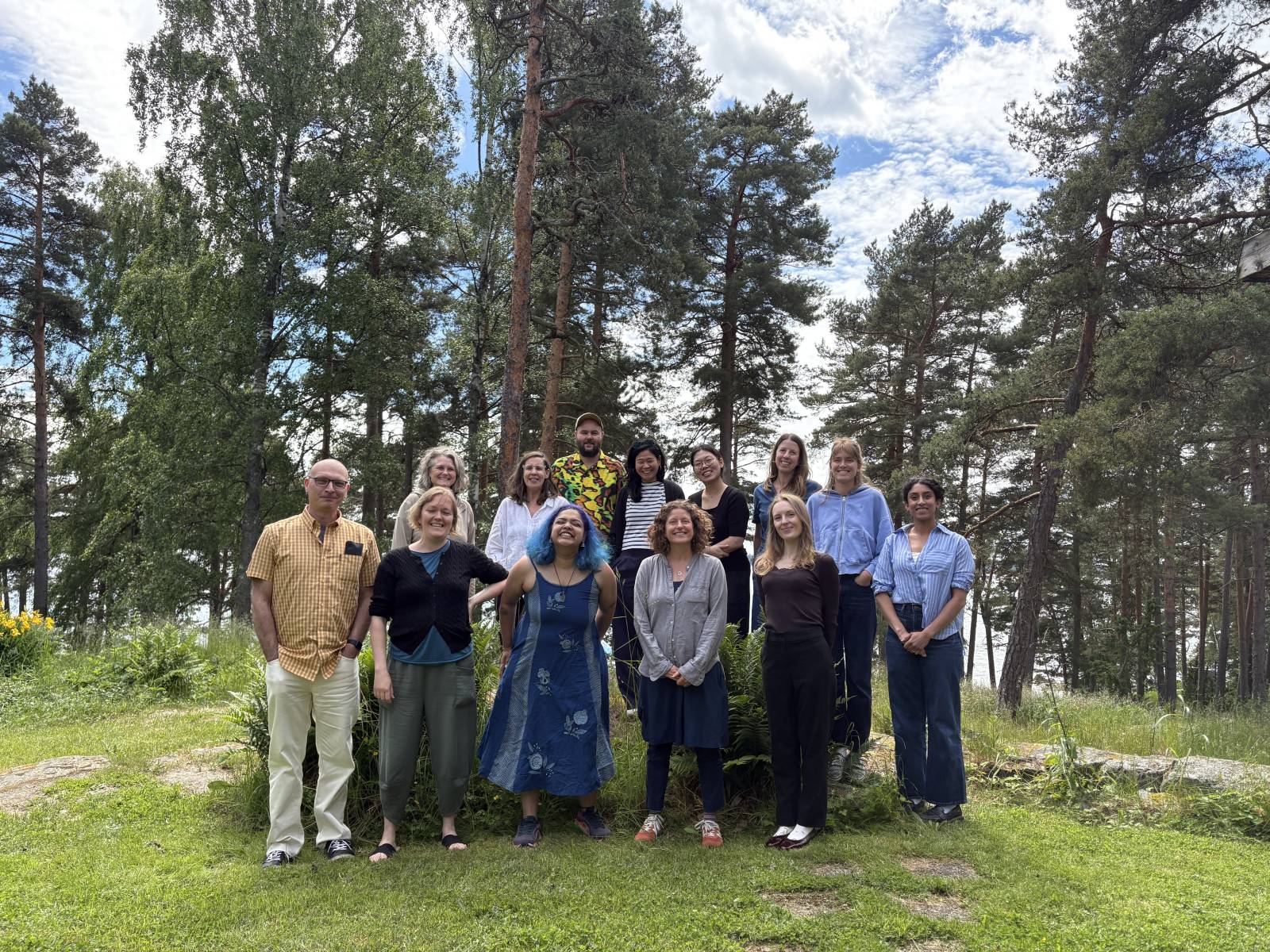
This workshop aimed to achieve three ends:
- to support researchers in developing critiques of language-based methodologies based on their evidence of “the ineffable”,
- to support qualitative researchers in developing non-linguistic tools that replace or augment more conventional methodological and analytical approaches, and
- to critically assess the methodological, political and ethical limits to methodological innovation in the face of “the ineffable”.