

The pilot study on functional driving vision is conducted in collaboration with the XR-SPACE project partners Pohjola Insurance, Taipale Telematics, and Tampere University (medicine and health technology as well as insurance science), along with two bus companies participating in the pilot study – Saaga Travel and Wiimax.
– The findings of this pilot study are anticipated to be utilized in the daily operations of transport companies, offering effective and engaging methods to enhance decision-making and work management. Additionally, the findings aim to improve the safety and accountability of each driver’s work, states Juha Laitsaari, Founder of Taipale Telematics, one of the Finland’s first smart traffic service providers.
Marjut Venäläinen, Business Lead at Pohjola Insurance, is happy with the pilot study:
– Traffic safety consists of many different components. One of the most important aspects is the ability to see and observe the traffic environment. We are very pleased that we have been able to contribute to enabling research related to improving traffic safety.
Closely 30 drivers attended the pilot study
The medical part of the pilot study aims to investigate the prerequisites for examining the functional driving vision of professional bus drivers in a driving simulator environment, combined with eye health examination and self-reported information from the drivers about their health and quality of life. The goal is to utilize the results to further develop safe professional transportation.
Volunteer bus drivers from both bus companies attending the study were invited to participate in a research day held at Tampere University’s Arvo Campus in October 2024. A total of three days of research were conducted, involving nearly 30 drivers.
During these research days, the drivers’ eye health (visual acuity, refraction, eye biomicroscopy, intraocular pressure, and funduscopic exam) was examined by an ophthalmologist. Additionally, the drivers completed two questionnaires regarding their health and quality of life.
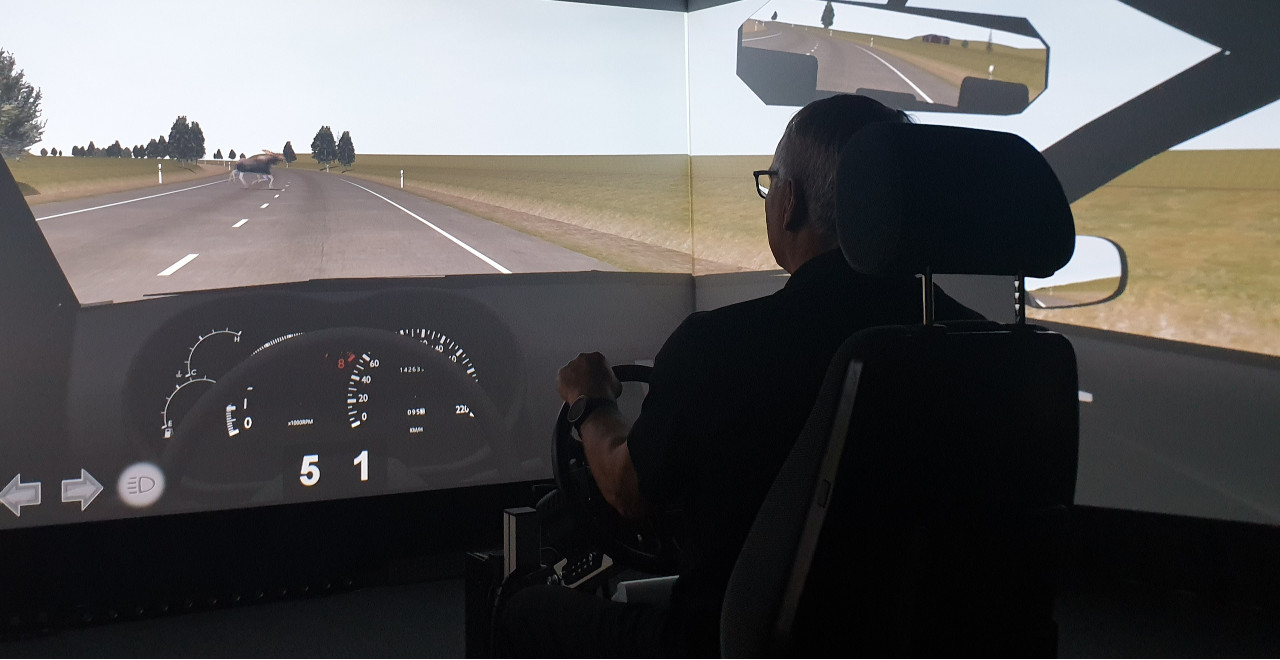
Simulator driving was a significant part of the pilot study
The most anticipated part of the research day for many was the functional driving vision tests conducted in the Visaxion driving simulation environment using a driving simulator. Both day and night driving were tested.
Research Director, Professor Emeritus of Ophthalmology, MD Hannu Uusitalo from  Tampere University emphasizes the significance of the use of simulator driving at the pilot study:
– In professional transportation, the aging population and workforce pose challenges to traffic safety. Studies conducted under static standard conditions and in clinical settings generally poorly reflect everyday performance. The aim of our pilot study is to combine the results of traditionally conducted health studies with findings observed in simulator driving and information obtained through surveys. We believe the pilot study demonstrates the value of testing functional driving performance in a simulation environment.
Focus group discussion concluded the research day
The research day concluded with a focus group discussion among the drivers, where they had the opportunity for informal discussion on the following themes:
1) Causes of risk situations and deviations in driving performance.
2) Expectations for the utilization of telematics data.
3) Possible concerns and grievances.
4) Wishes for the implementation of driving behavior monitoring.
The discussions in the focus groups were lively, and the attitude towards driving behavior monitoring was curiously positive.
What’s next?
The research has been continued in early 2025 with a questionnaire aimed at bus drivers, this phase was intended for all drivers of both bus companies. At this point, data is being analyzed – stay tuned for results!
Want to know more?
For further information, you can contact the following people at Tampere University:
Eye and Vision Research Group
Project Manager Hanna Samposalo
hanna.samposalo@tuni.fi
Insurance and Risk Management Research Group
Associate Professor (tenure track) Timo Rintamäki
timo.rintamaki@tuni.fi
Text by Hanna Samposalo and Katariina Saarela.
Photos by Hanna Samposalo.