

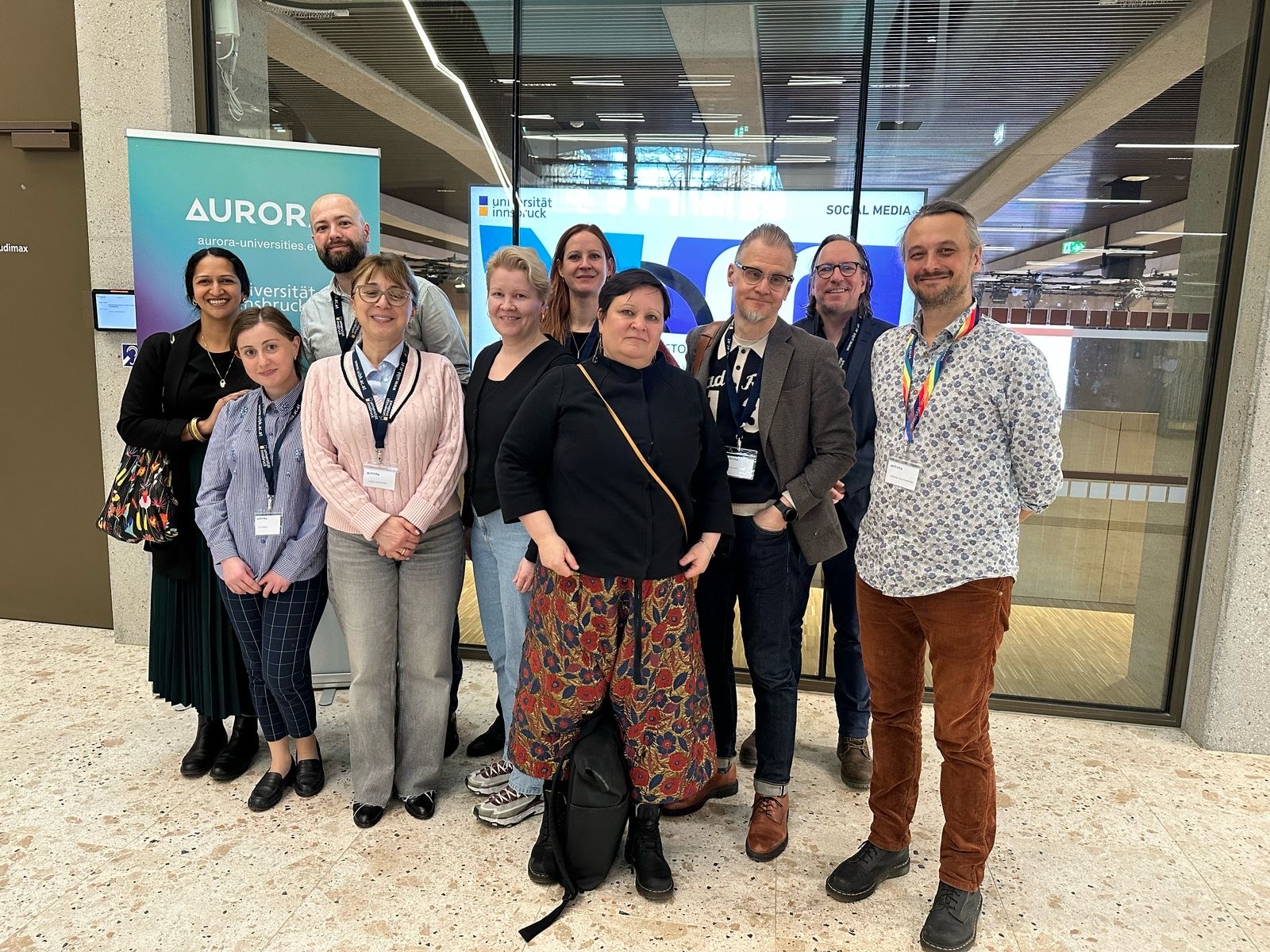
Key members of the PeaceEdu project who participated in the conference included experts from various institutions such as the Tampere Peace Research Institute (TAPRI), the Peace Education Institute (RKI), the University of Hildesheim, Ilia State University, and V. N. Karazin Kharkiv National University. Furthermore, the hosts of the conference, the University of Innsbruck, play a significant role as partners of PeaceEdu. Their contributions ranged from a keynote address and workshops to panel discussions; all aimed at enhancing the role of higher education in peacebuilding and fostering interdisciplinary and international collaboration.
During the Aurora International Peace Conference 2025 partners from V. N. Karazin Kharkiv National University actively participated in the process of intellectual exchange. Volodymyr Rodchenko, Director of Karazin Business School, moderated the round table “Strategic Narratives of Peacebuilding,” where participants discussed the role of higher education in implementing peacebuilding initiatives and harmonizing the interests of key stakeholders in the development of territories. Olena Parkhomenko, Associate Professor of the Department of Management and Administration of Karazin Business School, shared her experience in creating educational programs in conflict and post-conflict contexts using questioning techniques during the workshop “Questioning Techniques as a Tool of Creation Capacity-Building Programmes in HEI.” Yulia Prus, Associate Professor of the Department of Management and Administration of Karazin Business School, held a workshop “Skills for the Peacebuilder: Communication and Conflict Handling,” where participants assessed conflict resolution skills, became familiar with the role of a third party in peacebuilding, and worked out approaches to problem-solving and negotiations in practice. Viktor Savchenko, Associate Professor of the Department of Civil Law Disciplines of the Faculty of Law, delivered a report “Legal Education to Prevent Conflicts: The Role of Universities in Developing a Peacebuilding Culture” during the panel discussion “Peacebuilding Education Efforts Across HEI and Partners in Ukraine,” focusing on the crucial role of universities in providing future lawyers with the knowledge, skills, and values necessary to eliminate the root causes of conflicts and promote their peaceful resolution.
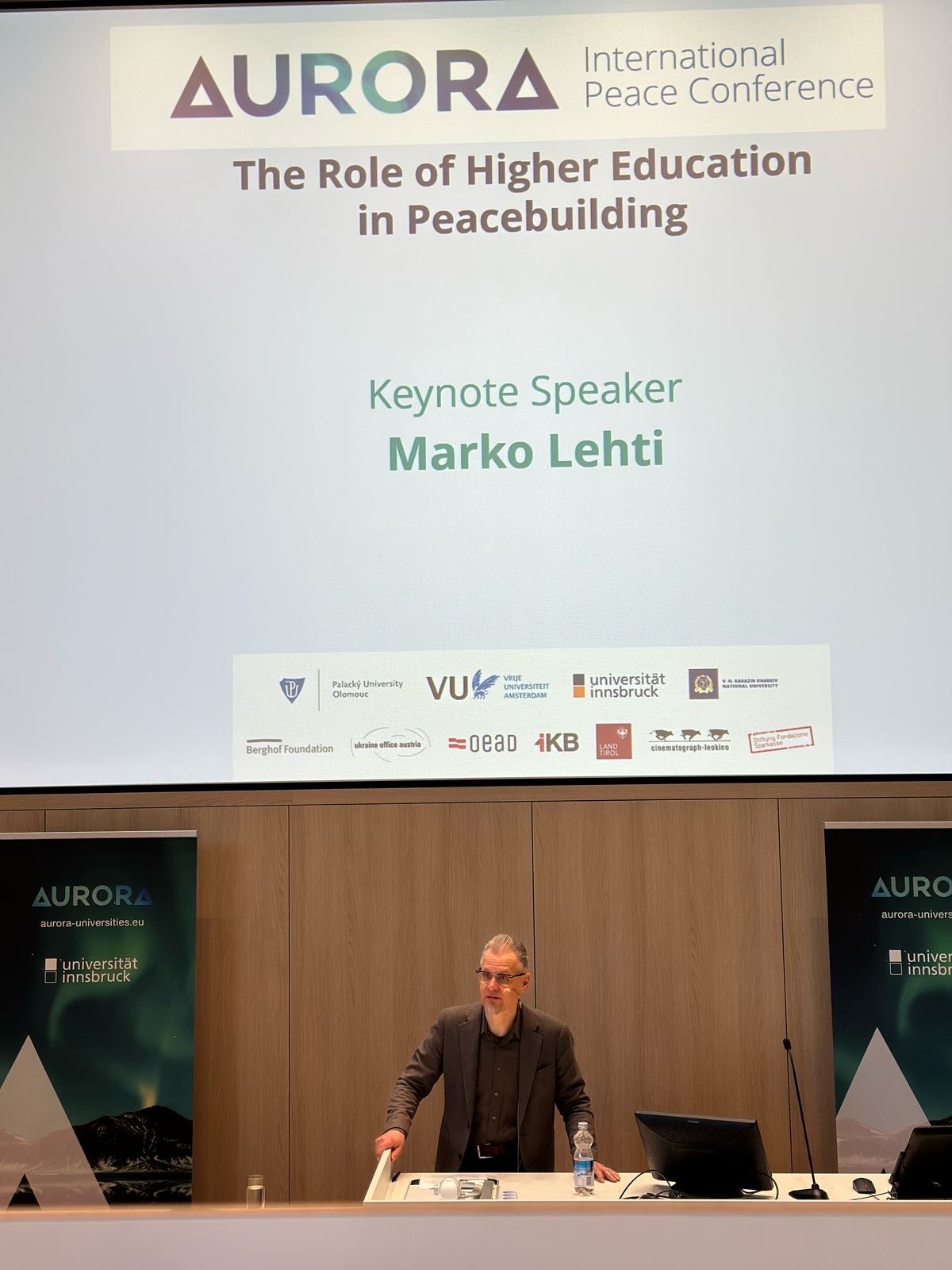
In his keynote address, the Coordinator of PeaceEdu and Director of Tampere Peace Research Institute, Marko Lehti talked about Pluriversality of Peace(Building): Agonistic Agencies, Complex Systems and Peace as/in Practices.
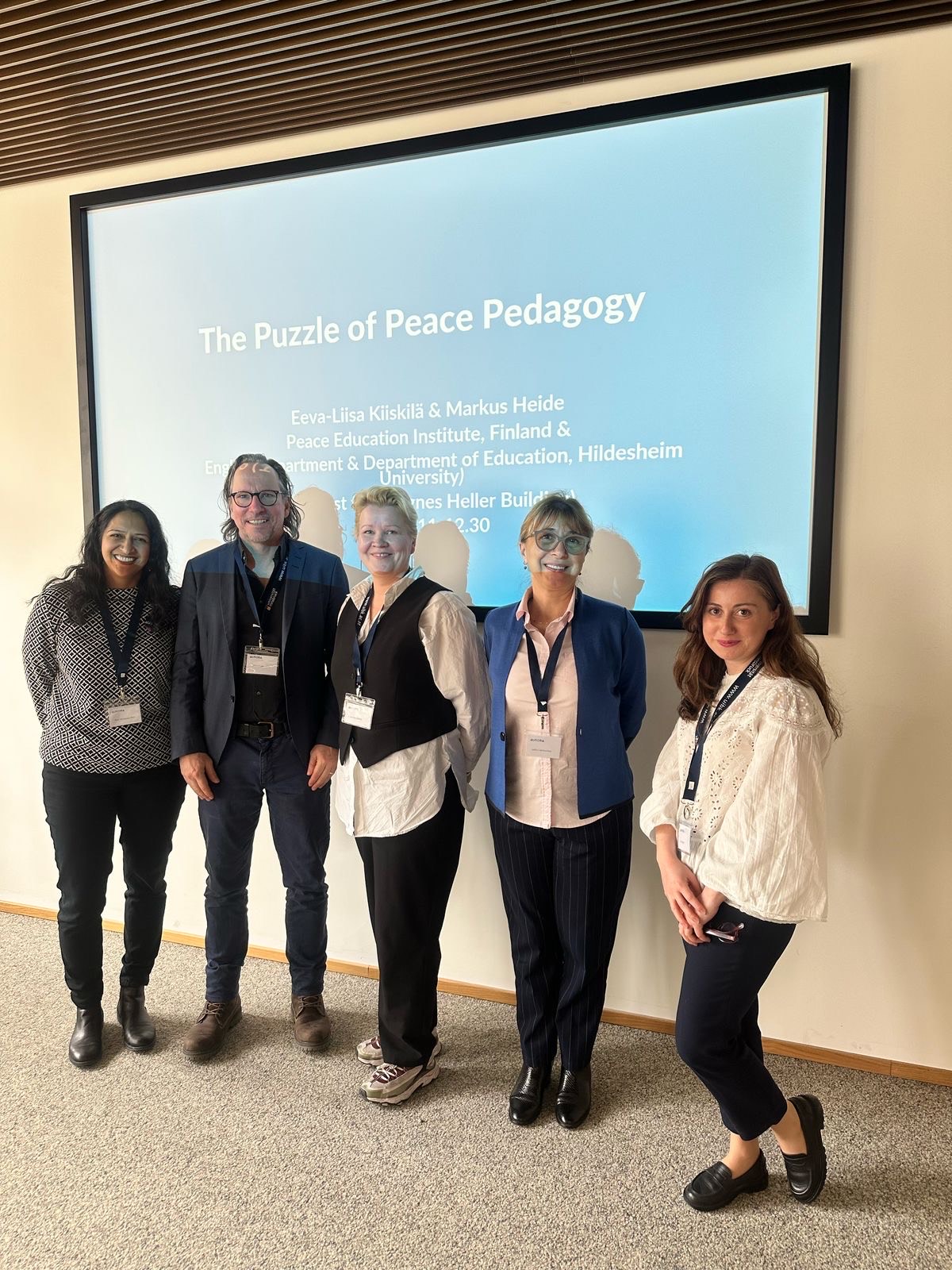
The workshop facilitated by Eeva-Liisa Kiiskilä (RKI) and Markus Heide and Viola Georgi (University of Hildesheim), The Puzzle of Peace Pedagogy, discussed peace education reflecting on understanding and critically examining peace and violence, guiding learners towards skills that promote sustainable peace, and exploring pedagogies that can be implemented in teacher training, schools, and youth work to foster nonviolent responses to conflict. Eeva-Liisa Kiiskilä says, “Peace education is education about peace, for peace and approaches are always context based. At the same time, it is highly relevant how we approach the topics and aims. The question asked in the workshop was, what are the modern and timely peace education pedagogies? This topic was discussed as well as good practices were shared.”
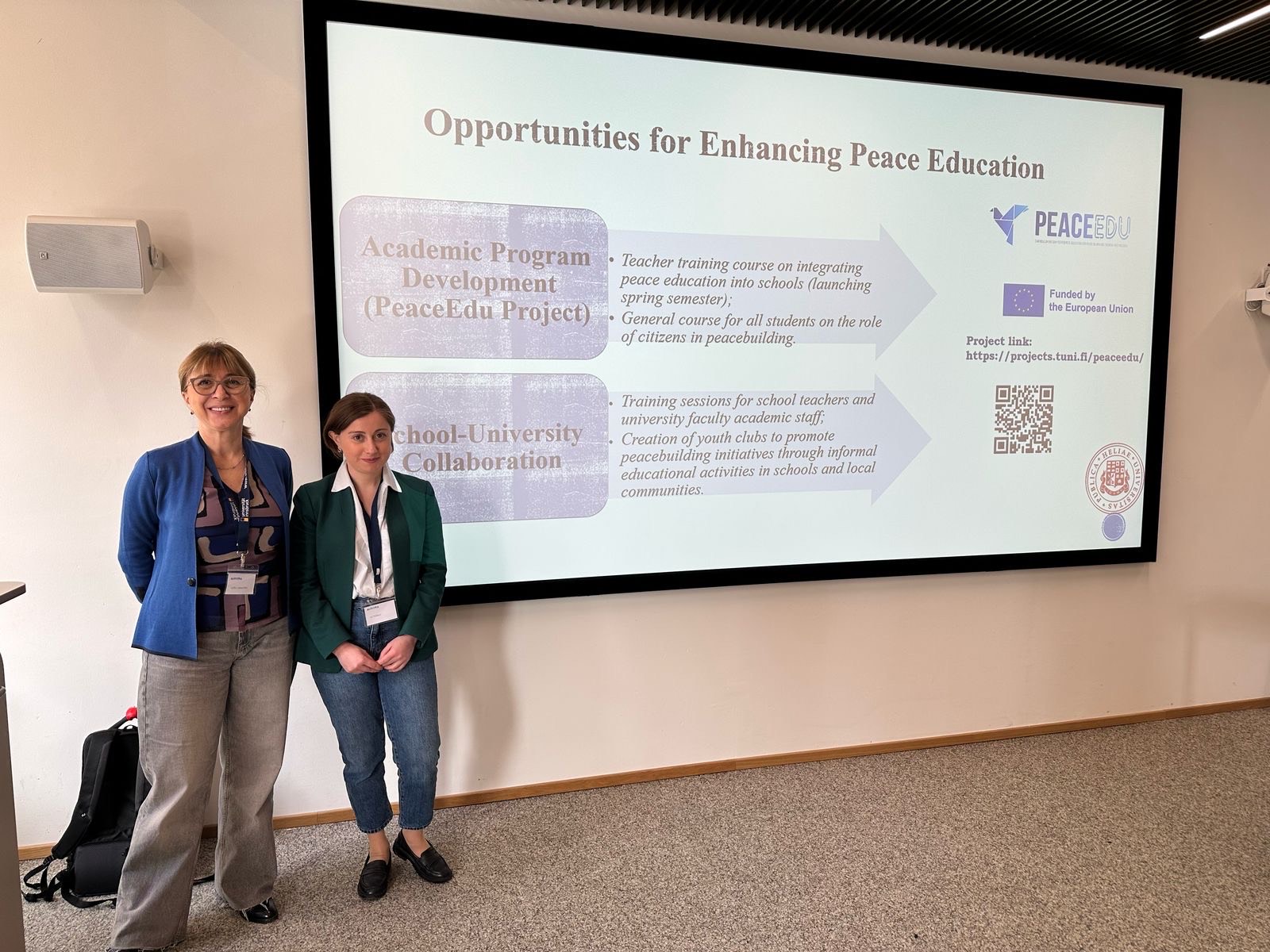
At the same time, Lia Tvildiani and Sofiko Lobzhanidze from Ilia State University presented a co-authored paper on Peace Education in the Educational Space of Georgia: Current Situation and Perspectives. Some of the highlights that Lia Tvildiani and Sofiko Lobzhanidze shared with us after the conference are that:
- Universities should actively contribute to peace efforts by integrating peace education into curricula, conducting relevant research, and engaging with communities to promote social cohesion. Insights from professionals involved in peace processes can help HEIs refine their educational programs and strategies, ensuring that peace education is practical and impactful.
- Effective peacebuilding requires collaboration between academics, policymakers, and practitioners. HEIs should foster interdisciplinary research and partnerships to address conflicts from multiple perspectives.
- The conference highlighted the importance of international alliances (such as Aurora Universities) in fostering knowledge exchange and joint initiatives that enhance global peace efforts. The event opened doors for new partnerships, emphasizing that sustained cooperation between institutions is key to implementing peace education initiatives effectively.
Among the hosts of the conference, the Aurora International Peace Conference Board Committee and the Unit for Peace and Conflict Studies at the University of Innsbruck were the project members of PeaceEdu: Rina Alluri (UNESCO Chair for Peace Studies, Universität Innsbruck), Egidio de Bustamante (University of Innsbruck); Katja Seidel (University of Innsbruck) and Andreas Oberprantacher (University of Innsbruck), who had multiple roles in the organization and implementation of the conference.
Egidio de Bustamante says, “As a member of the Aurora International Peace Conference Board Committee and of the Unit for Peace and Conflict Studies at the University of Innsbruck, on a personal level, it was a pleasure to host once more our colleagues from the “PeaceEdu Project”, having exchanged great moments and conversations with them. I feel proud of fostering such spaces in which people feel welcomed and enriched. Yet, on a professional level, I am all the more moved to have witnessed the depth and quality of the intellectual exchange, the breadth of the synergies generated among us and the shared commitment towards Peace Studies and Peace Education of all the colleagues from the Erasmus+ project “Curriculum Reform to Promote Education for Peace in Ukraine, Georgia and Moldova / PeaceEdu”. Our reencounter made me a firm believer in the potential that our partnership holds for a future centered in non-violent conflict transformation, and a commitment to continue with future projects with the same team.”
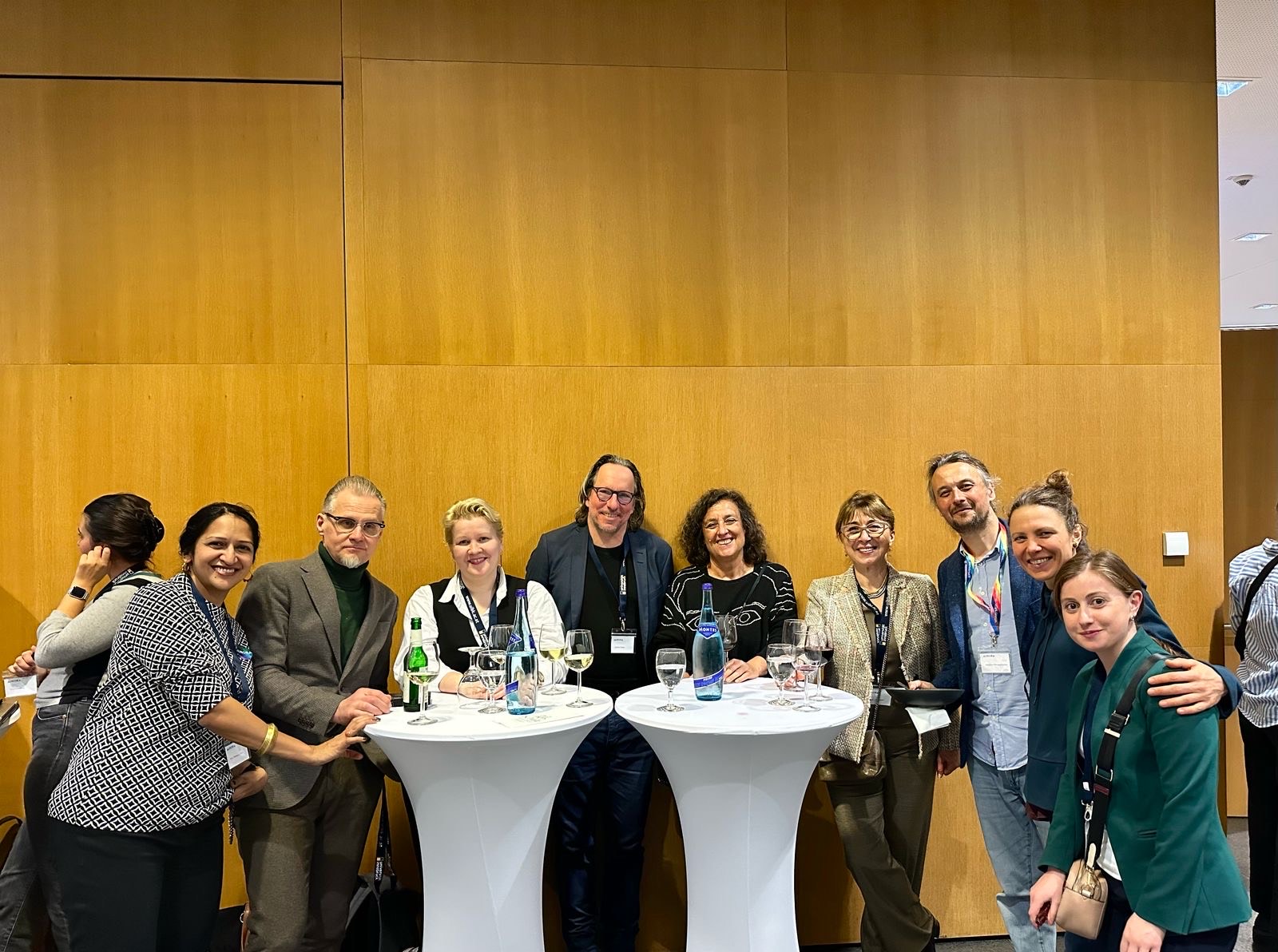
We at PeaceEdu are immensely proud of our partners and implementers for their active participation in the conference. Their efforts in bridging networks and contributing to the intellectual conversation about peace education enrich our program and significantly enhance its dissemination and visibility. PeaceEdu is proceeding successfully, and more news about our recent consortium meeting and project progress will follow later.
Disclaimer: The Project is funded by the European Union. Views and opinions expressed are however those of the author(s) only and do not necessarily reflect those of the European Union. Neither the European Union nor the granting authority can be held responsible for them.