


The initiative was organised through cooperation between the Centre for Peace Studies at the Faculty of International Relations, Political and Administrative Sciences (FRIȘPA), Moldova State University, and the SOCIORESTART Association, in collaboration with the Erasmus+ PeaceEdu project.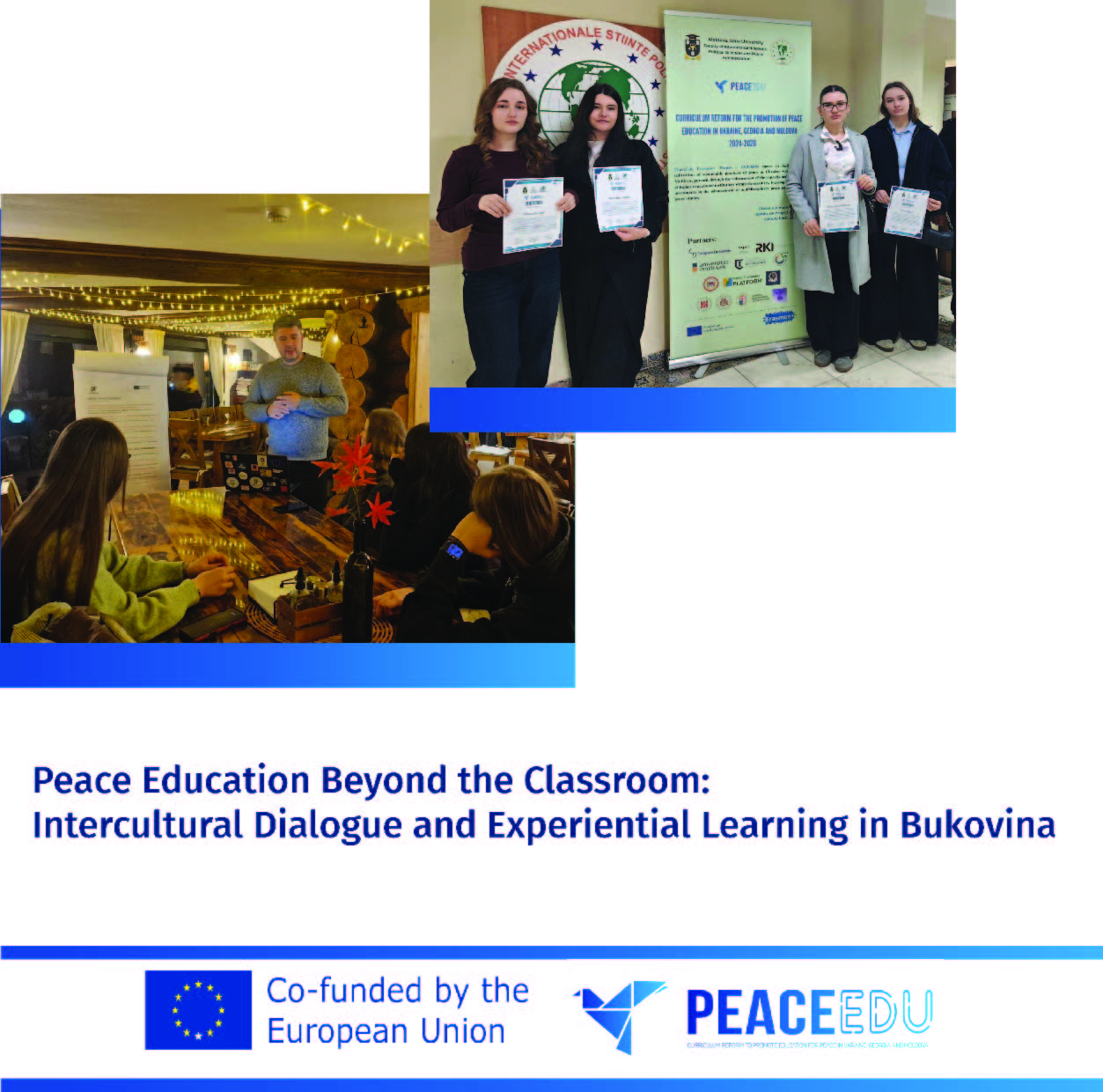
Using Bukovina’s cultural and natural heritage as a setting for learning, the programme encouraged participants to explore the connections between inner peace, interpersonal communication and cooperation. First-year students from FRIȘPA’s Russian-language group participated in educational activities on Rarău Mountain, where unexpected October snowfall provided an opportunity to practise adaptation, mutual support and teamwork.
Sessions on the psychological dimensions of peace education examined how emotions, perceptions, prejudices and collective identities shape relationships within and between communities. Drawing on Claude Lévi-Strauss’s work on ethnocentrism and Social Identity Theory developed by Henri Tajfel and John Turner, participants discussed how distinctions between “us” and “them” can contribute to stereotypes and intergroup distrust.
Particular attention was given to parallel linguistic and social spaces in Moldovan society. Participants reflected on how communities within the same society may experience different information environments, social networks and interpretations of history. Discussions emphasised that linguistic and cultural diversity does not inevitably lead to conflict: communication barriers, inequalities, identity-related insecurities and limited meaningful interaction can reinforce social divisions.
Interactive exercises and team-building activities translated these discussions into practice. Through negotiation, coordination and collective decision-making, students explored active listening, constructive disagreement and mutually acceptable compromises.
Visits to the Egg Museum in Vama, Voroneț Monastery and the Wood Art Museum in Câmpulung Moldovenesc, alongside participation in Retromobil Club România’s “A Walk Through Autumn Colours” event, added an intercultural dimension to the programme. These experiences created opportunities to engage with regional heritage and reflect on different cultural and social perspectives.
The programme demonstrated how peace education can connect academic knowledge with everyday interactions, helping students develop skills for dialogue, cooperation and the nonviolent resolution of conflicts.
The activities contributed to the objectives of PeaceEdu – “Curriculum Reform to Promote Education for Peace in Ukraine, Georgia and Moldova” (Project No. 101128854), which supports the development of peace education and peace studies in higher education.
We thank the SOCIORESTART Association for organising the initiative and ProLux, LUXENERGY POWER and METALLUX, based in Câmpulung Moldovenesc, for their support in making the programme possible.
🕊️ Peace education begins with understanding ourselves and others, and grows through the relationships we build across communities