


DC1 - Quan Nguyen

Host institutions and supervisors
Epishine – supervisor: Thomas Österberg, Dr. Gulzada Beket
Tampere University – supervisor: Prof. Paola Vivo
Scientific background
I have a background in chemical and polymeric materials engineering, with research experience on conjugated polymers for organic solar cell applications gained during my master’s studies at KAIST, involving organic synthesis and optoelectronic characterization. My bachelor’s training at Ho Chi Minh City University of Technology provided a strong foundation in polymer chemistry, processing, and structure–property relationships.
Research project
Towards industrially compatible high-performance organic IPV: Failure mode analysis
My research addresses stability and efficiency limitations in organic photovoltaics (OPVs) by investigating degradation mechanisms and interfacial losses within the device stack. The work focuses on developing air-stable, solution-processable electron-transport layers and engineering optimized photoactive layer/ETL/cathode interfaces to reduce trap density and energy barriers. By integrating materials design with device engineering, the goal is to enable industrially compatible OPV architectures with improved operational lifetime and performance.
DC2 - Giacomo Mazzetti

Host institutions and supervisors
CEA – Grenoble, France
Université Grenoble Alpes
Supervisors: Dr. Renaud Demadrille, Dr. Cyril Aumaître
Scientific background
I’m an organic chemist with a Master’s degree in Chemical Sciences from the University of Florence, Italy, where I developed a strong foundation in organic chemistry. My Master’s thesis, carried out at the ICCOM – CNR institute in Florence, focused on the synthesis of organic photosensitizers for dye-sensitized solar cells (DSSCs) for indoor use. My work mainly involved designing and synthesizing new molecules and evaluating their properties for photovoltaic applications.
Research project
High efficiency and stable DSPV cells and mini-modules for low-light operation
In my PhD project, I will develop new organic dyes for DSSCs optimized for indoor lighting. I will synthesize low-complexity dyes and design dye cocktails tailored to artificial light spectra, while developing stable and eco-friendly electrolytes, including cobalt-, copper-based, and organic HTMs. I will also create polymer-based counter electrodes to replace platinum and fabricate optimized devices using Design of Experiments and machine learning to improve performance, stability, and sustainability.
DC3 - Akshay Govardhan
Host institutions and supervisors
Epishine AB – Supervisors: Mr. Thomas Österberg, Dr. Gulzada Beket
Tampere University – Supervisor: Prof. Paola Vivo
Scientific background
I hold a master’s degree in Organic and Molecular Electronics from TU Dresden, Germany. My thesis focused on fabricating quasi-2D perovskite thin films using spin coating and slot-die coating, studying the impact of processing parameters on their physical and optical properties. I have 1.5 years of cleanroom experience fabricating organic and inorganic devices such as FETs and capacitors, at cfaed, Dresden.
Research project
Towards industrially compatible high-performance organic IPV – Active material meta-processes
This project investigates how OPV active-material ink parameters such as thermal history, shear, substrate interactions, and drying conditions affect performance and stability. Using in-situ photoluminescence, it aims to quantify ink aggregation and vertical donor–acceptor stratification. The goal is to systematize these effects in an industrially relevant framework, enabling scalable OPV devices with high performance and long-term operational stability.
DC4 - Sayantani Santra
Host institutions and supervisors
Tor Vergata University of Rome
Prof. Francesca Brunetti, Dr. Francesca De Rossi
Scientific background
I’m a materials science and nanotechnology researcher driven by the thrill of translating nanoscale precision into technologies that actually work. I earned my MSc in Nanoscience & Nanotechnology from the University of Glasgow , UK, and my BTech in Metallurgical & Materials Engineering from NIT Durgapur, India. At imec–KU Leuven, I dove into advanced lithography and nanoscale fabrication, building strong cleanroom instincts and a careful approach to materials characterization—experience that continues to shape the experimental questions I choose to chase.
Research project
Fully printed large-area Bi-based PSK mini-modules for indoor photovoltaic (IPV) applications
This project focuses on developing fully printed, large-area Bi-based perovskite mini-modules for indoor photovoltaics, designed to harvest energy from artificial light and power low-consumption electronics. I will fabricate 5 × 5 cm² flexible devices using scalable coating methods (blade/slot-die), optimize film quality through careful ink and process control, and integrate laser patterning to reduce dead area. The goal is efficient, stable, and more sustainable indoor-ready PV technology.
DC5 - Gaukhar Nigmetova

Host institutions and supervisors
Host institution: University of Groningen
Supervisor: Maria Antonietta Loi
Scientific background
I completed my Bachelor’s degree in Chemistry and my Master’s degree in Chemical and Materials Engineering at Nazarbayev University (Kazakhstan), where I had the first opportunity to engage in research on perovskite solar cells. My early research focused on the growth of 3D/2D Cs-based perovskite films for devices with improved stability, particularly under harsh space conditions. Moving from space back to Earth, I discovered a new interest in indoor photovoltaics, which became the main focus of my PhD studies at the University of Groningen.
Research project
Highly efficient and stable Sn halide PSK-based IPVs
Within the MENTOR project, I am developing Pb-free, wide-bandgap Sn-based perovskites suitable for indoor photovoltaics. I tune the composition of the active layer and investigate additives aimed at suppressing the oxidation of Sn2+, controlling crystallization, and improving the optoelectronic properties of Sn-based perovskites. Moreover, another key aspect of my work is identifying charge-transport materials compatible with these perovskite compositions, for example, by replacing the common PEDOT:PSS hole-transport layer with well-established self-assembled monolayers.
DC6 - Harris Goniotakis
Host institutions and supervisors
Universitat Politècnica de Catalunya (UPC)
Supervisors: Prof. Edgardo Saucedo Silva, Dr. Francisco Hernandez
Scientific background
I am a materials scientist specializing in nanophotonics and optoelectronics. For my bachelor’s thesis, I investigated the optical properties, plasmon-exciton coupling, and strain profiles of few-layer MoS₂ heterojunctions. During my master’s thesis, I engineered light-responsive, photoactuating microwires using silver-doped phosphate glass. These projects deepened my expertise in materials design, microstructural engineering, and energy conversion, laying a strong foundation for developing advanced functional materials for optoelectronic applications.
Research project
Molecular inks route for the synthesis of high-efficiency chalcogenide and chalco-halide compounds for indoor photovoltaic applications
As part of the MSCA Doctoral Network MENTOR project, my research focuses on developing high-efficiency, Kesterite-based (CZTS) thin-film indoor photovoltaics. By optimizing earth-abundant, non-toxic absorber materials—such as implementing innovative germanium alloying—I aim to maximize device performance under low-light conditions. This work bridges the lab-to-application gap, providing sustainable, autonomous energy harvesting solutions for smart-building environments and Internet of Things (IoT) devices.
DC7 - Radia El Kouissi

Host institutions and supervisors
University of Siena Supervisors: Prof. Adalgisa Sinicropi, Prof. Maria Laura Parisi
Scientific background
I have a background in process engineering & Chemistry, combining industrial process optimization with sustainable materials research. During my bachelor’s studies, I worked with Fromageries Bel Company on improving production quality by applying statistical process control methods and calculating control chart limits. I later pursued a master’s degree in chemistry, where I synthesized a plant-based magnetic cobalt ferrite nanocomposite and evaluated its efficiency in removing metal ions and dyes from aqueous solutions.
Research project
Eco-design of materials and processes for eco-efficient IPV devices
My research focuses on assessing the sustainability of next-generation IPVs using advanced LCA methodologies. The work develops detailed life cycle inventories, applying prospective LCA modelling, and conducting comprehensive environmental impact analysis, with particular attention to critical raw materials used in IPVs manufacturing. The main objective is to identify optimal materials, combinations, and processes for the most sustainable life-cycle eco-profile, enabling eco-efficient absorbers, dyes, charge transport materials, and encapsulation processes.
DC8 - Vishnu Vardhana Chary Sri Giri

Host institutions and supervisors
1) Centre for Nanotechnology and Smart Materials (CeNTI), Portugal – Dr. Sandra Mariana da Silva Marques
2) University of Rome tor Vergata (UNITOV), Italy – Prof. Francesca Brunetti
3) Worldsensing (WSE), Spain – Dr. Francisco Hernandez
Scientific background
I am Vishnu Vardhana Chary Sri Giri, a Marie Skłodowska Curie Doctoral Researcher with a background in electrical and electronics engineering and advanced materials for energy applications. I completed my bachelor’s degree in electrical and electronics engineering where I developed anti-reflective coatings on crystalline silicon solar cells to enhance efficiency. During my Master’s in Nanoscience and Technology, I improved the efficiency of dye sensitized solar cells using carbon allotropes to enhance charge transport in the photoanode, which was later translated into a book chapter in Springer Nature. After my master’s, I gained semiconductor industry experience in Singapore, collaborating with Qualcomm and Texas Instruments with projects based on advanced materials like Parylene AF4 and development of polymer resists for backend dicing applications.
Research project
Development of sustainable transparent encapsulation barrier membranes for IPVs
I am currently pursuing my PhD at CeNTI – Centre for Nanotechnology and Smart Materials in Portugal within the Marie Skłodowska Curie Doctoral Network MENTOR. My research develops cost efficient, transparent encapsulation barrier membranes for indoor photovoltaics that harvest artificial light to power low energy electronics and IoT systems. I investigate degradation driven by moisture permeation, oxygen diffusion, and interfacial instability in third generation solar cells like perovskite, organic, and dye sensitized solar cells. Using physical vapor deposition and solution based multilayer coatings, I engineer low permeability, optically transparent barriers. I perform permeability, adhesion, and aging studies to correlate encapsulation performance with device stability and lifetime under indoor illumination conditions.
DC9 - Reem Khanfar
Host institutions and supervisors
Tampere University: Prof. Paola Vivo
Scientific background
I hold a Bachelor’s degree in Chemical Engineering from Jordan University of Science and Technology (JUST) and an Erasmus Mundus Joint Master’s Degree in Chemical Nanoengineering, completed across France, Poland, and Italy. During my master’s thesis at the Centre for Hybrid and Organic Solar Energy (CHOSE) in Rome, I investigated two-dimensional perovskite absorbers, focusing on precursor formulation, crystallization control, annealing optimization, and the fabrication of p–i–n and n–i–p perovskite solar cells, while gaining extensive experience in thin-film processing and photovoltaic device characterization.
Research project
Solution-processed lead-free Bi-based PSK for IPV applications
My research focuses on developing low-toxicity bismuth-based perovskite-inspired materials for next-generation indoor photovoltaics. My work investigates how composition, crystal growth, and thin-film processing influence optoelectronic properties of such materials to enable efficient indoor light harvesting. Through low-temperature, solution-based fabrication, solvent engineering, and additive-assisted crystallization, I aim to reduce defect densities, improve film quality, and enhance device performance and stability. Ultimately, my goal is to advance lead-free photovoltaic technologies for sustainable energy harvesting and future Internet of Things (IoT) applications.
DC10 - Milan Saju

Host institutions and supervisors
Tampere university
Supervisor: Prof. Paola Vivo
Scientific background
I hold a master’s degree in chemistry from Mahatma Gandhi University, Kerala, India. During my master’s studies, I had the opportunity to carry out my thesis research at the Indian Institute of Science (IISc) under the supervision of Prof. Anshu Pandey, where I investigated the optoelectronic properties of various colloidal quantum dots. Following this, I continued at IISc as a Project Assistant, further strengthening my research experience in nanomaterials and optoelectronic characterization.
Research project
Development of charge transport materials for IPVs
My research focuses on the development of inorganic charge transport layers (CTLs) for indoor photovoltaic applications, combining materials design, device fabrication, and photophysical characterization to understand charge transport and interfacial processes. I work on optimizing CTLs and integrating them into lead-free indoor photovoltaic devices to improve performance. Currently, my research is centered on tin oxide (SnO₂) as an electron transport layer (ETL), where I explore ink-level chemical modification of colloidal SnO₂ to tailor its properties and enhance device performance under indoor lighting conditions.
DC11 - Niccoló Radice

Host institutions and supervisors
Technische Universität München. Supervisor: Prof. Alessio Gagliardi
Scientific background
I hold a Bachelor’s degree in Physics from the Università degli Studi dell’Insubria and a Master’s degree in Physics from the Università degli Studi di Milano-Bicocca, where I specialized in solid-state and condensed matter physics. During my Master’s, I developed a strong interest in machine learning and deep learning. My master thesis combined these fields by investigating attention mechanisms in graph neural networks for molecular potential modeling, bridging data-driven methods with materials science applications.
Research project
Data-driven methods for experimental guidance and image analysis
As a PhD candidate at the Technical University of Munich within the MENTOR, I work on data-driven methods to support the optimization of solution-processed device fabrication. My research combines Bayesian Optimization with Gaussian-process models and machine-learning approaches that incorporate practical constraints. In parallel, I use convolutional neural networks to analyze experimental images for films and devices to predict optical and electrical properties, with ongoing work to extend the approach to image sequences.
DC12 - Sneha James
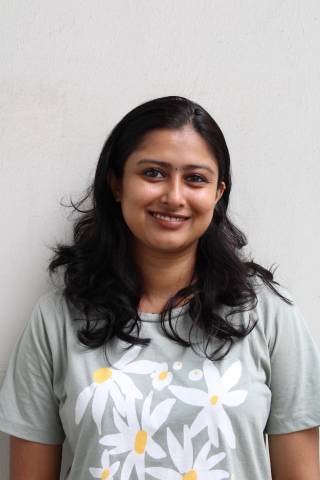
Host institutions and supervisors
Catalan Institute of Nanoscience and Nanotechnology – Prof. Monica Lira Cantu
Polytechnic University of Catalonia – Dr. Edgardo Saucedo Silva
Scientific background
I am a materials and nanoscience researcher with a strong interest in solar energy conversion. I hold a Master’s degree in Chemistry from NIT Trichy, India, where my thesis focused on the optimization and fabrication of dye-sensitized solar cells (DSSCs). I later gained extensive hands-on experience in perovskite solar cell research at the Indian Institute of Science (IISc), Bangalore, working on large-area deposition of perovskite and transport layers using spray coating, slot-die coating, thermal evaporation, CBD, and ALD. This training strengthened my expertise in device optimization, reproducibility, and performance improvement for perovskite solar cells and modules.
Research project
Establishing equivalent ISOS protocols for Indoor PVs employing Pb-free Perovskite Solar Cells.
The project aims to fabricate Pb-free halide perovskite solar cells and to develop indoor stability testing protocols based on the IEC TS 62607-7-2 standard. In this project, I will study spectral-invariant light sources for indoor photovoltaics (IPV) under variable illuminance levels by evaluating spectral coincidence, temporal stability, non-uniformity at the sample plane, stable spectral profiles, and high illumination uniformity. Further, I will examine IPV performance at the maximum power point under constant illumination for hours to days by setting up accelerated indoor testing with day–night cycles, as established for lead-based perovskites and OPVs, and I will complement this with in-situ optoelectronic characterization to identify degradation mechanisms. Finally, I will upgrade our patented room-temperature encapsulation methodology for indoor conditions and apply it to fabricated Sn-based perovskite IPVs for stability assessment.
DC13 - Aral Karahan

Host institutions and supervisors
Interdisciplinary Nanoscience Center of Marseille (CINaM) – CNRS
Aix-Marseille University
Supervisor: Dr. Christine Videlot-Ackermann
Scientific background
I completed my Bachelor’s degree in Materials Science and Nanotechnology Engineering at TOBB University of Economics and Technology (Turkey). I then continued my studies at FAU Erlangen–Nürnberg (Germany), where I discovered the field of organic photovoltaics. During my thesis, I focused on upscaling of organic photovoltaic devices,with the aim of reducing the efficiency gap between small area and large area OPV cells. After my thesis, I was motivated to continue working on the same research area.
Research project
Realization of printed-sustainable large area indoor-photovoltaic mini-modules
DC14 - Giovambattista Tomassi

Host institutions and supervisors
Eco Recycling srl – Supervisor: Dr. Emanuela Moscardini
La Sapienza University of Rome – Supervisor: Prof. Francesca Pagnanelli
Scientific background
I am a passionate materials engineer, focused on critical raw materials recovery to face supply challenges in the renewable energy sector. I hold a bachelor’s degree in Materials Science and Engineering (University of Naples, Italy) and a master’s degree in Functional Materials Engineering with AI tools for sustainability (FAMEAIS Erasmus Mundus program: University of Grenoble Alpes INP-PHELMA, France – University of Aveiro, Portugal). My diverse expertise in materials characterization serves as the foundation for my current research into sustainable recycling solutions and circular economy frameworks.
Research project
Recycling processes for inorganic and PSK-based IPVs
This research focuses on developing innovative scalable recycling processes for next-generation photovoltaics, based on perovskite, kesterite, dye-sensitized and organic solar cells, which are not yet commercially available. By adopting a proactive ‘design-for-recycling’ approach, the goal is to ensure these emerging technologies are industrially compatible with a circular economy from the outset. Exploring the state-of-the-art of existing recycling processes worldwide will allow to develop innovative recycling processes that will be optimized at lab scale. To demonstrate their scalability, a technical and economic feasibility study will also be conducted, leading to the development of a business plan.
DC15 - João Victor da Silva

Host institutions and supervisors
Worldsensing (WSE), supervisor: Dr. Francisco Hernández-Ramírez
Universitat Politècnica de Catalunya (UPC), supervisor: Dr. Edgardo Saucedo
Scientific background
My background is in Electronic Engineering; I hold a bachelor’s degree from the Federal University of Pernambuco (Brazil); a master’s in integrated Circuits and Embedded Systems from ENSEEIHT – Institut National Polytechnique de Toulouse (France); and a Master of Science in Information Systems from the University of São Paulo (Brazil). These experiences have given me a diverse academic background that connects hardware, embedded technologies, and information systems.
Research project
Development and Validation of IoT prototype powered by MENTOR IPVs
My research aims to develop and validate a scalable IoT framework compatible with IPVs. We will implement power management and control strategies to effectively manage the energy generated by IPV systems when coupled to IoT devices. This work focuses on commercial IoT edge devices used in structural health monitoring applications. To validate the functionality of the solution, we will deploy prototypes in relevant environments. The goal of this research is to contribute to long-term sustainability and cost-effectiveness of IoT technologies.
DC16 - Daniel Parsons

Host institutions and supervisors
Fluxim AG (Fluxim), supervisor: Dr. Davide Moia
Universitat Politècnica de Catalunya (UPC), supervisor: Dr. Edgardo Saucedo
Scientific background
I have a background in physics, with mixed industrial and research experience in the characterization of emerging photovoltaic devices. I completed my integrated master’s degree in physics at the University of Manchester, where I gained a passion for the simulation and characterization of semiconductor devices during my master’s thesis. Throughout my time in industry, I was involved in the characterization of IPV devices and developed an understanding of the challenges facing this emerging field.
Research project
Analysis of degradation and device optimization of IPV devices
My research focusses on understanding the device physics behind different IPV architypes developed within MENTOR, through a combination of drift-diffusion simulations, finite-element modelling, and optoelectronic characterization techniques. I will also focus on the identification of different degradation mechanisms and failure modes under indoor stressing conditions. The goals for my project are to understand the important device parameters to optimize the performance of IPV devices during operation and to understand the role of a range of environmental parameters on the expected lifetime of these devices.
DC17 - Michele Danesi

Host institutions and supervisors
National Physical Laboratory (NPL), supervisors: Dr. James Blakesley, Dr. George Koutsourakis
Tampere University, supervisor: Prof. Paola Vivo
Scientific background
I have a background in physics, with hands-on research experience in nanomaterials deposition and characterisation for innovative PV and soft-robotics applications. I completed my bachelor’s and master’s degrees at the Università degli Studi di Milano, where I developed a strong interest in experimental physics and PV devices. Following my studies, I worked for two years on related research projects within the University, developing the technical and analytical skills needed to carry out and address experimental challenges.
Research project
New methods for accurate and reproducible assessment of performance, losses, and reliability in IPV cells and modules.
My research focuses on understanding and addressing the IPV field’s needs for a reproducible and comparable assessment of IPV devices, materials, and architectures. By further developing the IPV measurement setup at NPL, I aim to deliver a standards-compliant system and protocol to determine the performance of IPV cells and mini-modules for use in interlaboratory comparisons. Furthermore, my objective is to develop novel photoluminescence (PL) and electroluminescence (EL) setups to enable spatial mapping of series resistance and defect-related inhomogeneities. The research also involves developing stress-testing conditions suitable for identifying causes of premature failure in IPV modules, as well as designing and validating an energy-rating protocol for IPV devices.