

Background
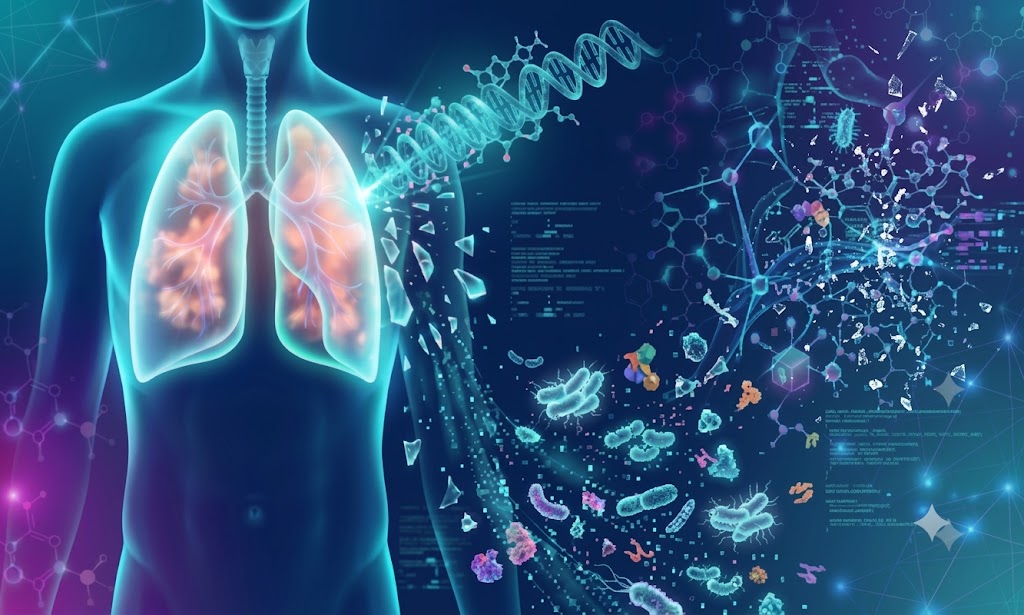
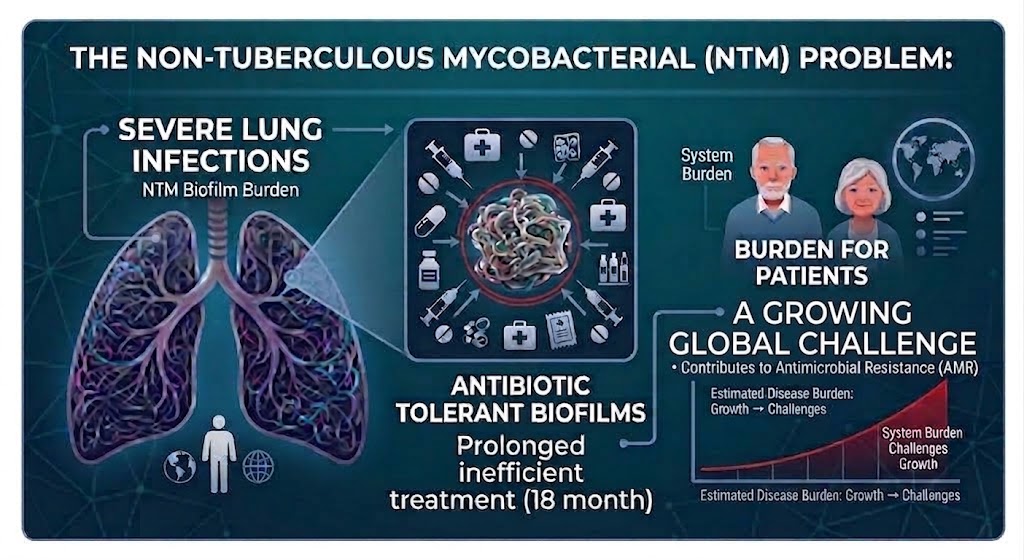
Non-tuberculous mycobacterial (NTM) pulmonary infections are a severe and growing global health challenge. This rising prevalence is primarily driven by an aging global population, the increasing incidence of underlying chronic lung diseases, and environmental factors that favor pathogen growth and human exposure¹. Current antimicrobial therapies are exceptionally prolonged—often spanning 12 to 24 months of continuous, complex multidrug regimens—highly toxic, and associated with high failure rates, with severe cases seeing an alarming success rate of only about 23%². The root cause of this inefficiency is that mycobacteria form dense biofilms in lung lesions. These biofilms are highly tolerant to both immune defenses and standard antibiotics, driving chronic infections and increasing the risk of antimicrobial resistance. Furthermore, prolonged treatments drive immense healthcare costs, with the global NTM healthcare market currently valued at over $15 billion and projected to reach nearly $20 billion³ by 2029 and $25 billion³ by 2033.
Goal
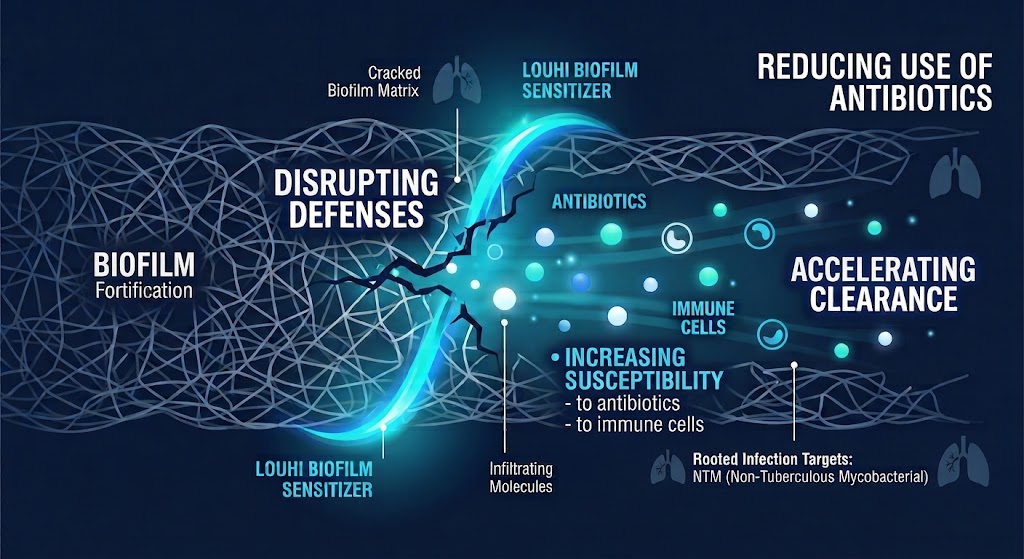
The LOUHI project introduces a fundamentally new therapeutic concept to tackle this crisis: Biofilm Sensitizers. Using a proprietary screening platform, we have identified promising compounds that weaken bacterial defenses by disrupting the biofilm. Our goal during this Research to Business (R2B) project is to achieve pre-clinical proof-of-concept. We are developing advanced, targeted delivery methods to ensure these sensitizers reach deep lung lesions effectively, making the bacteria highly susceptible to existing antibiotics and the patient’s immune system.
Impact
Our approach significantly enhances the efficacy of existing antibiotics, aiming to drastically shorten treatment times. By accelerating bacterial clearance, we deliver a profound impact across the entire healthcare ecosystem:
-
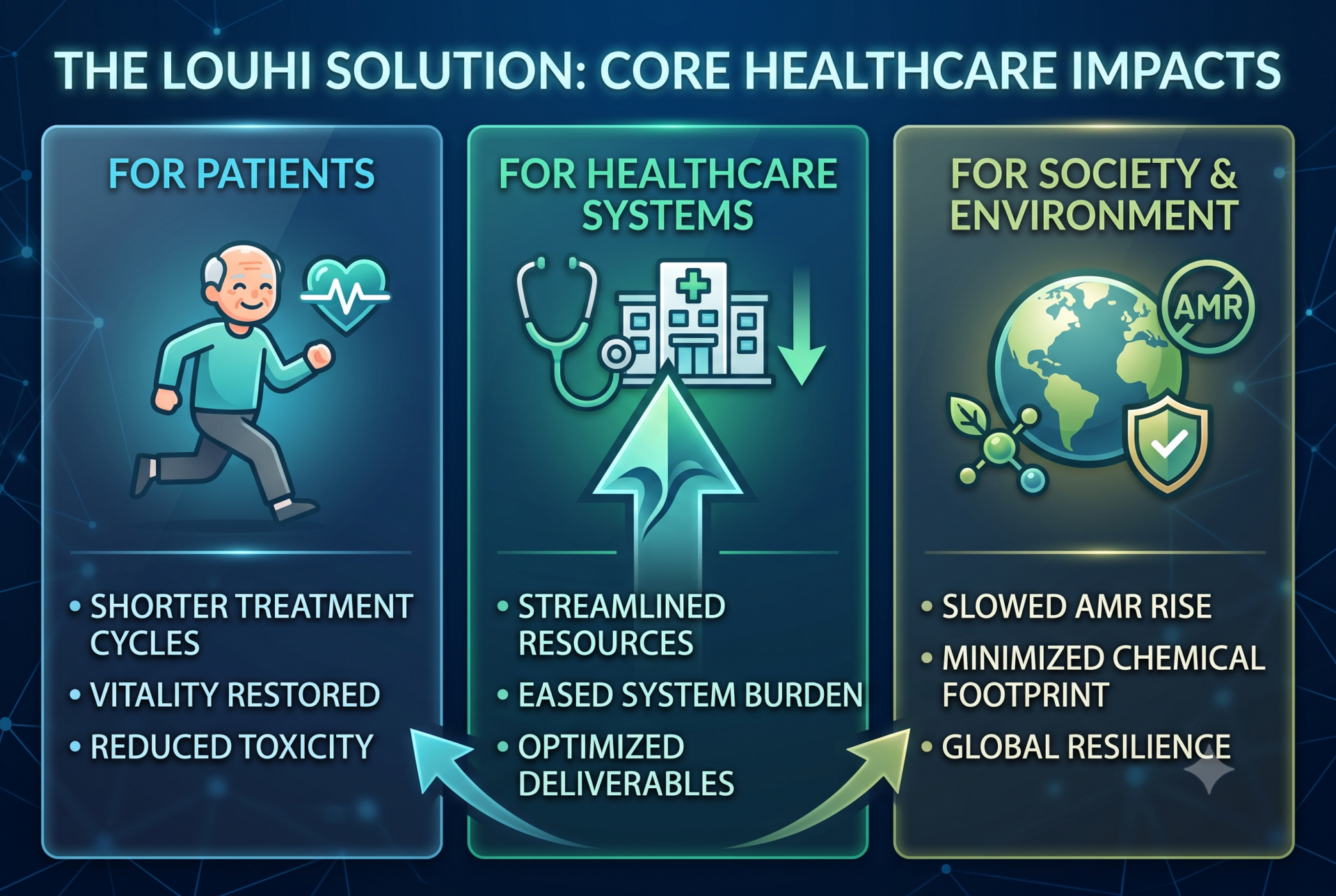
For Patients: LOUHI provides significantly shorter and more efficient treatment cycles. This drastically improves the quality of life and functional capacity for patients while reducing the severe toxicities—such as kidney and hearing damage—associated with years of complex multi-drug antimicrobial exposure.
-
For Healthcare Systems: Shortening treatment durations from years to months directly reduces the reliance on prolonged clinical follow-ups and expensive hospital stays, significantly easing the day-to-day burden on healthcare resources.
-
For Society & Environment: By decreasing the overall volume and duration of antimicrobial use, our biofilm sensitizers help slow down the global rise of antimicrobial resistance (AMR) and minimize the chemical and pharmaceutical footprint on society and the environment.
Funding & Partnerships
The LOUHI project is currently in its Research to Business (R2B) phase, advancing pre-clinical development while preparing the commercialization of breakthrough biomedical research. We are supported by a strong network of funders, academic partners, and industry experts:
-
Research & Academic Collaboration: The innovation originates from the Infection Biology research group at the Faculty of Medicine and Health Technology (MET), Tampere University. The specialized pharmaceutical aerosol formulation development is conducted in close collaboration with the University of Helsinki.
-
Funding: Our commercialization preparations and early-stage scientific validation are supported by the Business Finland Research to Business funding instrument, a highly competitive program dedicated to creating high-growth deep-tech spin-offs from Finnish universities.
-
Strategic Mentoring & Steering: We are supported by a world-class international Steering Group featuring leading experts in global health, pulmonology, clinical development, and pharma business strategy. Furthermore, the project is proudly supported by the prestigious SPARK Finland program, which provides world-class mentoring and an extensive network for life science and health-tech innovations