
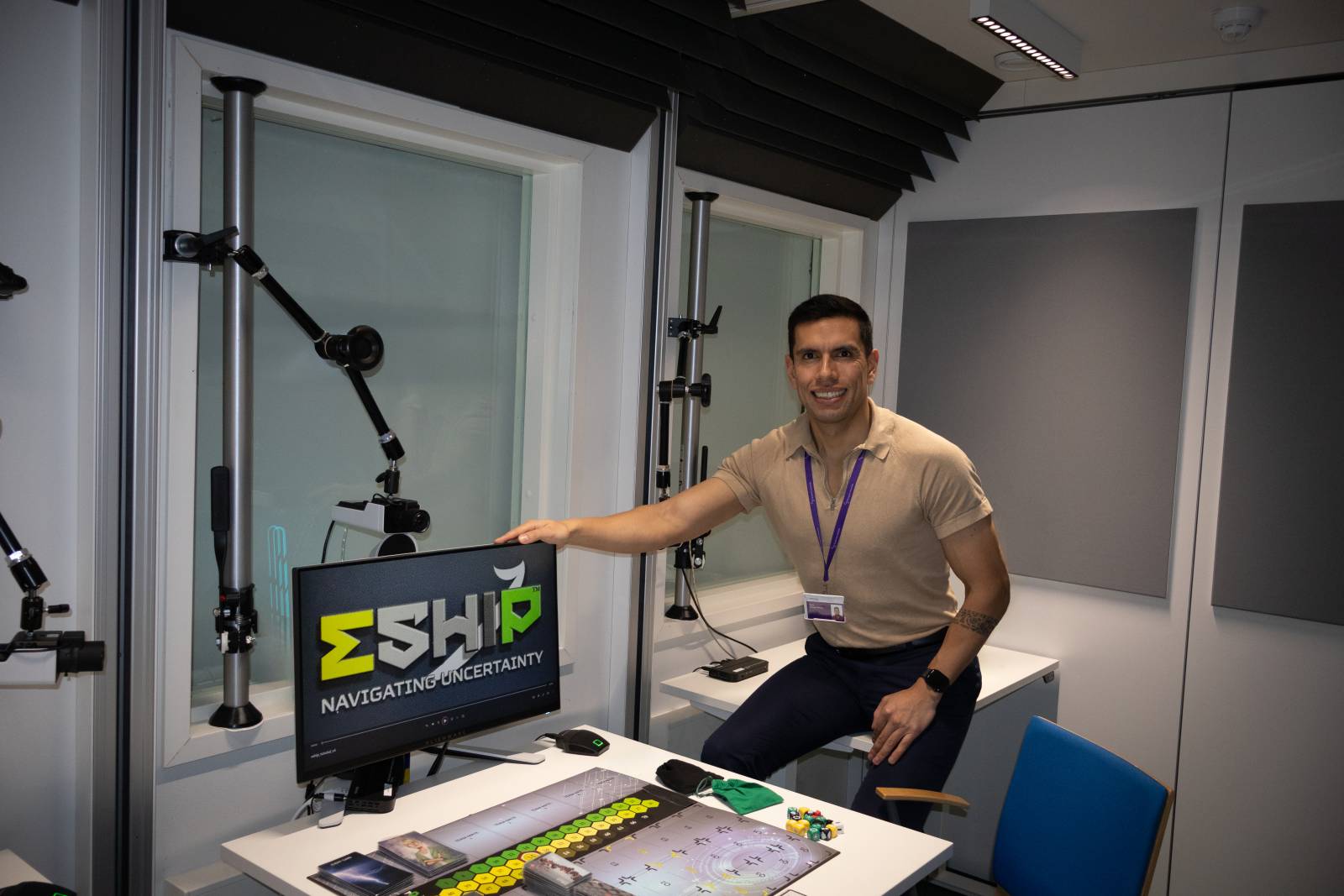
The study gathered multimodal data from 87 participants at Tampere University between September and December 2025.
The GATE Project reached an important milestone at the end of 2025 by completing its data collection phase. Conducted from September to December 2025 at Tampere University’s Ludus research space, the study examined how emergent leadership develops during real-time teamwork in a gamified business learning environment.
As teamwork becomes central to both organisational life and higher education, understanding how leadership arises naturally within groups is increasingly important. While previous research has shown that emergent leadership plays a valuable role in team success, much less is known about how it unfolds moment by moment during collaboration. The GATE Project was designed to address this gap.
The study involved 87 participants from Tampere University, organised into 29 groups. Working in teams of three, participants took part in an experimental session built around an entrepreneurship board game focused on uncertainty in real business settings. The game combined within-team collaboration with between-team competition, creating a setting in which team interaction, decision-making, and leadership could be observed as they evolved in real time.
During the sessions, the research team collected a wide range of multimodal data, including self-reports, team performance measures, video, audio, facial expressions, electrodermal activity, and heart rate. This multimodal time-series data will support a detailed analysis of how social cognition and social contagion develop within teams and how these processes contribute to emergent leadership and team performance.
The project brings together methodological approaches from Complex Dynamical Systems and Machine Learning to better understand the nonlinear and evolving nature of teamwork. By combining these perspectives, the project aims to reveal how physiological, emotional, and behavioural processes interact during collaborative activity.
“Working together in interactive learning environments, we get to witness the energy, creativity, and genuine collaboration that make this research so rewarding,” says Elvis Ortega-Ochoa. “By analysing team dynamics with machine learning, we hope to uncover new insights that benefit education, team development, and organisational life.”
Beyond its scientific contribution, the project is expected to provide practical value for both educators and business administrators. The findings will help inform the design of effective gamified teamwork practices and offer guidance on combining collaborative and competitive play to foster learning, engagement, and leadership development.
The completion of data collection marks the beginning of the next phase of the project, in which the research team will analyse the material to better understand how leadership emerges in action and how sustainable team social dynamics can be supported in fast-changing environments.