
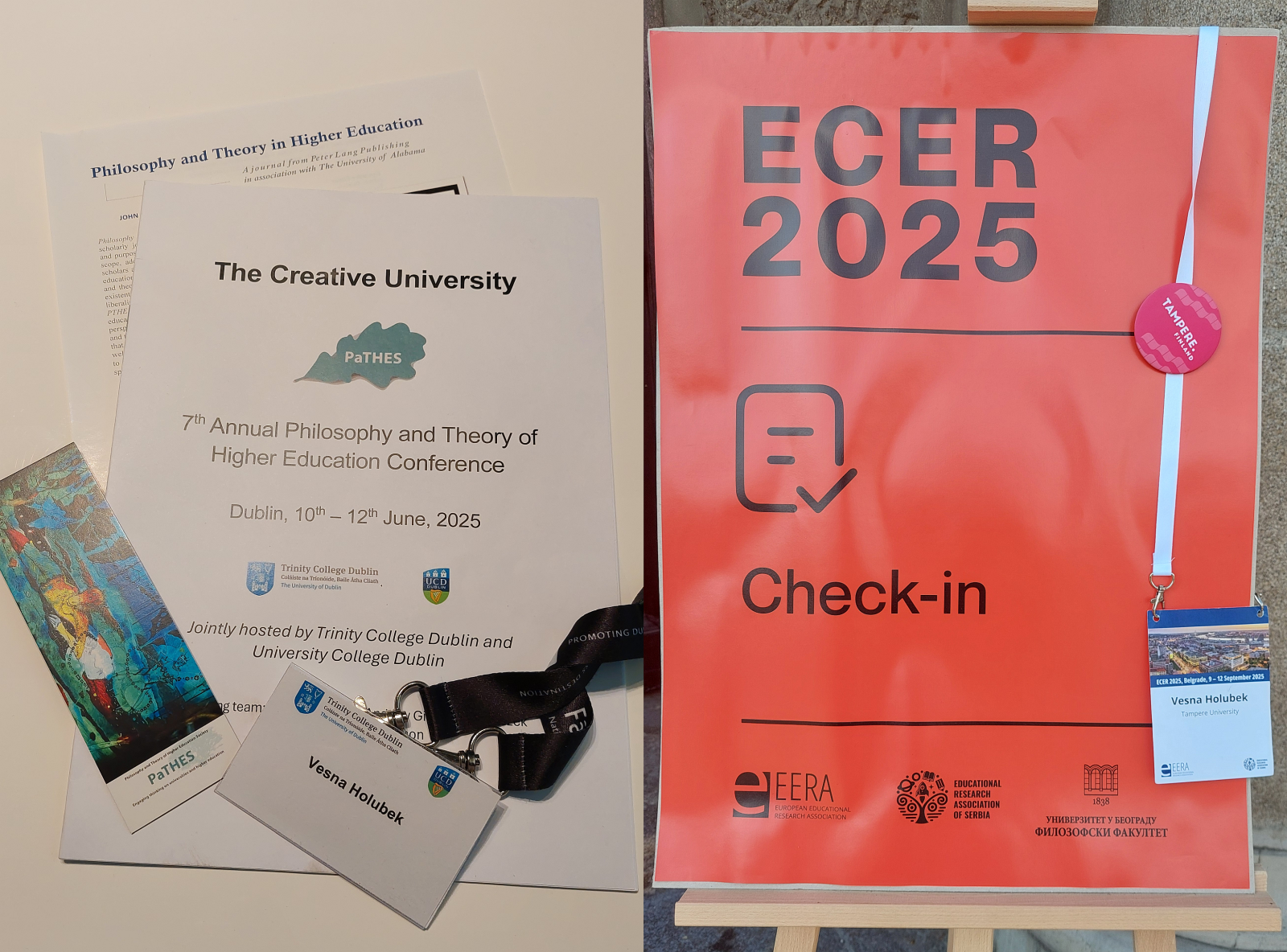
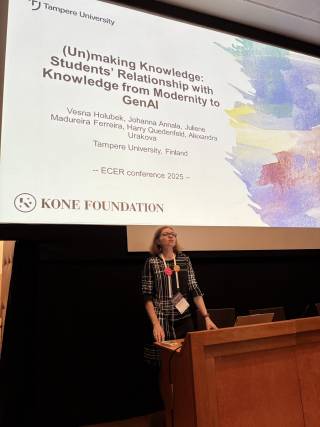
Our presentation and the following conversations explored the features of the (changing) context of higher education today, context in which discussions on knowledge are rare. The current educational research and practices focus primarily on learning process spotlighting the ‘how’ of higher education (trend sometimes called the ‘lernification’) and obscuring the view of the ‘what’, i.e. knowledge to be learned and taught. At the same time, policies on education and curriculum incentivise universities to focus on employability and competencies seemingly replacing the knowledge-related goals of higher education. The increasingly digitalised learning environments and the use of generative artificial intelligence (genAI) bring another dimension to the dynamics of the student-knowledge relationship—the dimension we are yet to fully understand. From the perspective of history of ideas, we can recognise the seeds of these contextual changes in the literary and intellectual narratives of the classical modernity.
We invited the conference audience to reflect on these changes and the theoretical and methodological aspects of our research thus bringing new insights for our further inquiry into the dynamic relationship between knowledge and students in higher education.
Text: Vesna Holubek