
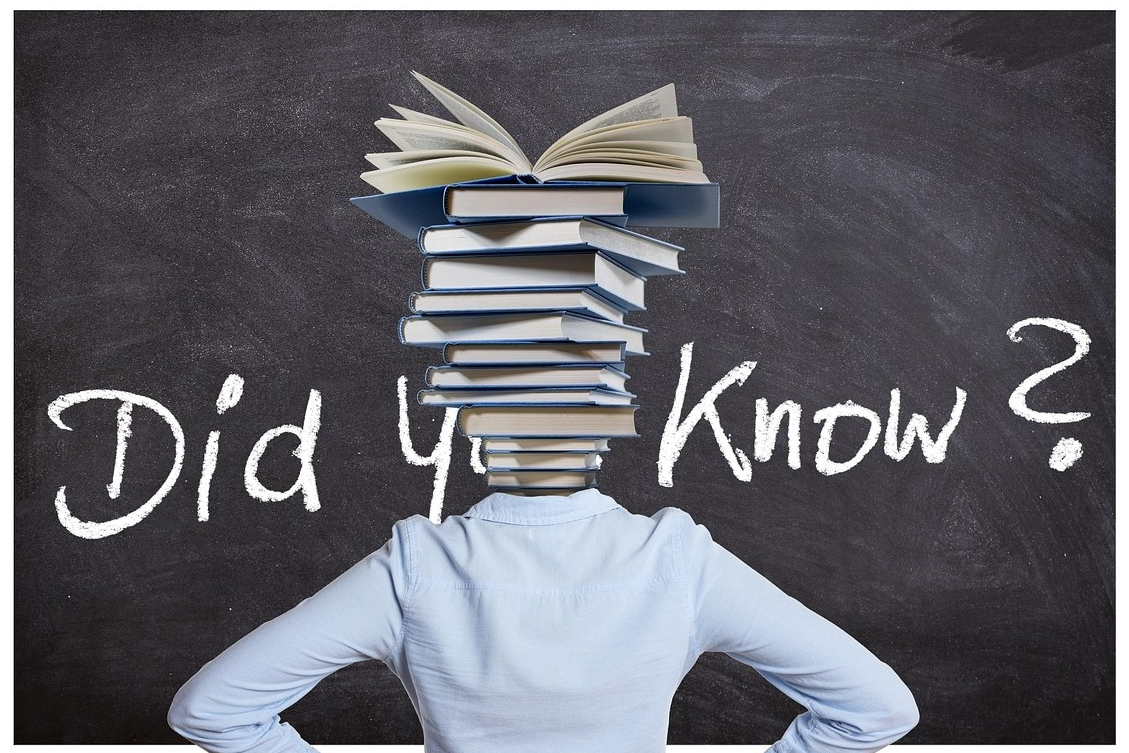
Throughout history, societal shifts and technological innovations have sparked both hope and fear within the cradle of higher education—the university. When the printing press was invented, many feared it would undermine oral teaching traditions. In the 17-18th century, the emergence of dictionaries and encyclopedias opened new pathways to knowledge. Historian Linn Holmberg has referred to this period as the dictionary craze. Suddenly, access to knowledge—or at least fragments of it—was no longer reserved for the academic elite. Holmberg’s idea of shortcuts feels strikingly familiar today. Information is everywhere, just a Google search or an AI query away.
Education policy has eagerly embraced technology’s promise to make learning more efficient: more degrees, faster. Alongside this, a growing emphasis on skills-based learning has led to the belief that education should deliver practical, job-ready competencies. Theoretical and abstract knowledge, by contrast, is often dismissed as elitist, unnecessary, or a waste of time. Both teachers and students may find it easier to adopt a utilitarian mindset, especially when faced with tighter schedules and pressure to progress quickly. Rarely in educational policy, public discussion or institutional strategies do we see students being encouraged to pursue intellectual curiosity for its own sake.
Yet, at the same time, we face a global risk: the spread of incomplete, misleading, or outright false information. A lack of knowledge about knowledge itself deepens societal and political divides and threatens democracy. We see this play out in the news every day. Another challenge is ethical and moral–how to be human in the age of AI. AI philosopher Pii Telakivi has discussed how AI can be seen as ‘cognitive extenders’ and, as such, can enhance or diminish moral agency.
That’s why we must ask: How do we perceive knowledge in our own field of teaching today? What is worth knowing—and whose knowledge counts? Most importantly, what kind of relationship to knowledge do we want to foster in our students?
The university is a unique space and place where knowledge is both created and shared. As researchers and educators, we play a crucial role in defining and offering knowledge. These decisions are negotiated in curriculum development and ultimately enacted in the classroom. This process—where research becomes teaching—shapes the kind of knowledge students have access and the kind of relationship they can build with it. It also influences their identity.
Higher education scholar Paul Ashwin has argued that one of the most important goals of university education is to help students to form a relationship with knowledge that transforms them and expands their understanding of what they can do in the world. This kind of relationship is often referred to as powerful knowledge. Powerful knowledge is conceptual and systematic, distinct from experiential or context-bound knowledge. While experiential knowledge can be meaningful, it lacks the empowering quality of powerful knowledge. In the end, all students should have access to powerful knowledge because it enables full participation in society and democracy. It equips students not just to function in the present, but to shape the future.
Today’s emphasis on efficiency and experience-based, work-ready knowledge, challenges the role of systematic, conceptual knowledge in higher education. The choices we make influence how students perceive knowledge and their ability to act as informed experts and human beings in their fields—well into the future. So, as we navigate the pressures of efficiency and information overload, let’s pause and reflect: How much can we condense teaching and accelerate learning without losing the essence of becoming a knowledgeable person? Are shortcuts to knowledge even possible?
These are the topics what our research project (Un)Making Knowledge: Students’ relationship with knowledge from modernity to AI explores and elaborates during the following years (2025-2029). We are very happy to have Linn Holmberg, Pii Telakivi and Paul Ashwin as our collaborators in the project enriching our research inquiry and helping us in challenging the commonly held ideas on knowledge in higher education.
Johanna Annala
Literature
Ashwin, P. (2022). The educational purposes of higher education: changing discussions of the societal outcomes of educating students. Higher Education, 84, 1227–1244.
Holmberg, L. (2023). Right and Wrong Ways of Knowing: The Dictionary Craze and Conflicts of Learning in Eighteenth-Century Europe. 1700-tal: Nordic Journal for Eighteenth-Century Studies, 20, 8–33.
Telakivi, P. (2023). Extending the Extended Mind: From Cognition to Consciousness. Springer International Publishing.