
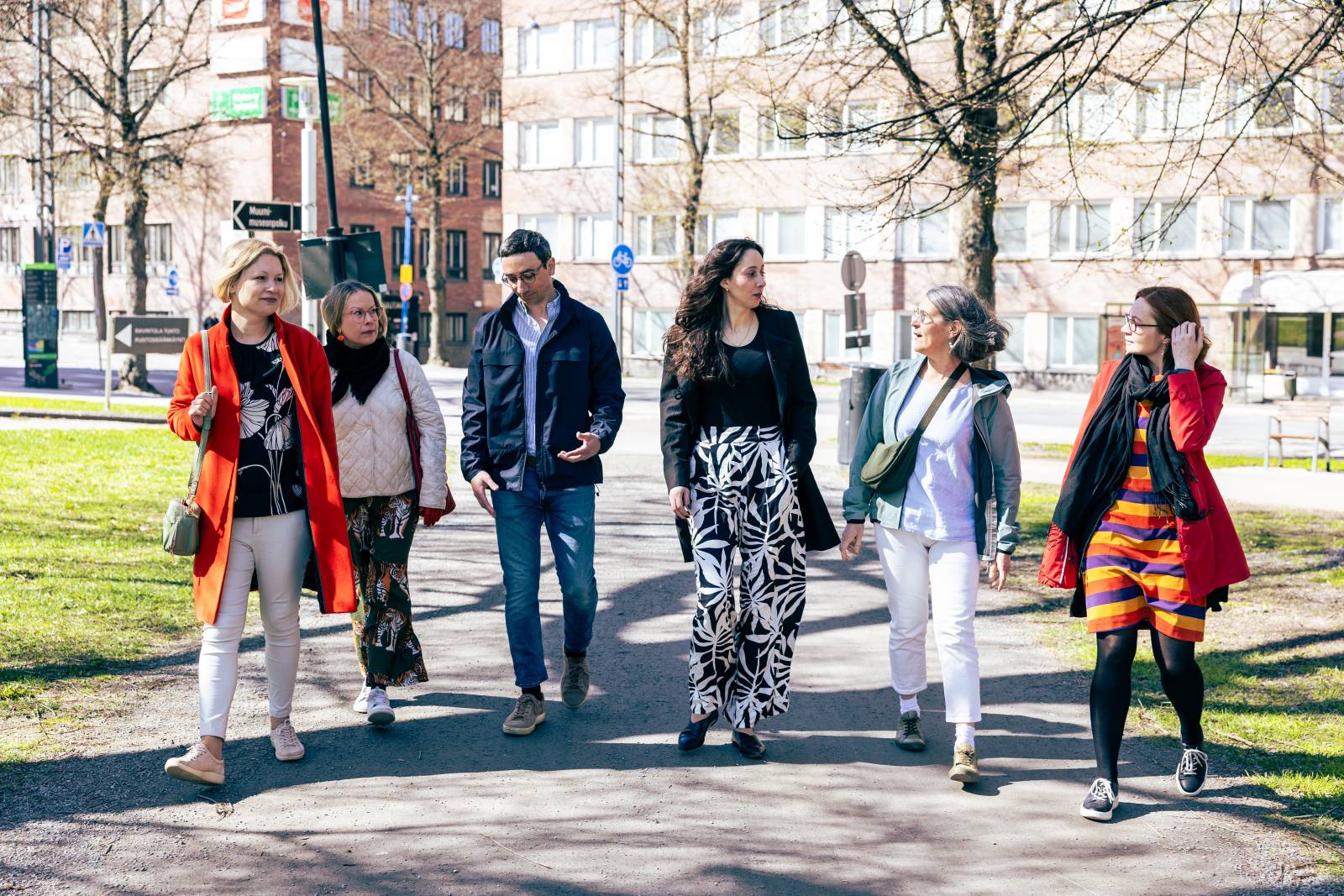
In May 2025, the Faculty of Education and Culture at Tampere University welcomed Dr. Pii Telakivi, a philosopher and researcher from the University of Helsinki, whose work bridges the topics of artificial intelligence, ethics, and human cognition. Her visit also marked the beginning of a research collaboration with the project, particularly in the sub-study coordinated by Associate Professor Juliene Madureira Ferreira. Together, they are working on examining AI as a non-human mediator of knowledge across cognitive science and educational psychology studies. This collaboration investigates how AI technologies impact thinking, reorient learning processes, and shape students’ perceptions of themselves as learners within AI-mediated environments. This sub-study uncovers how AI not only supports but also transforms educational experiences, potentially redefining the boundaries of human learning and agency.
Pii’s visit offered a compelling opportunity to reflect on the evolving role of AI in education and the ethical challenges it presents. With the presentation “AI, Ethics and the Human Mind: Perspectives on Human Learning and Development,” Pii delved into how AI technologies are reshaping cognitive processes, including memory, decision-making, and critical thinking. Drawing on philosophical concepts such as extended cognition and distributed memory, she explored how AI tools—ranging from smart assistants to wearable devices—can serve as cognitive extenders. While these tools offer promising support for learning, they also raise concerns about overreliance and the erosion of foundational skills, particularly among students who are still developing core cognitive abilities. Pii also raised the debate on how to identify when AI tools become too effortless to use, and possible consequences for users who may overlook their limitations, leading to blind spots in moral and educational decision-making.
Pii’s insights reinforced the importance of maintaining human oversight and ethical responsibility in AI-supported learning. “In teachers we trust,” she reminded the audience, emphasising that while AI can be reliable, it cannot replace the moral and pedagogical role of educators. Her visit was part of the faculty’s broader commitment to fostering interdisciplinary dialogue and critical reflection on emerging technologies. It inspired educators, researchers, and students within our community to consider not just how AI can be used in education, but how it should be used—ethically, thoughtfully, and in ways that preserve the integrity of human learning.
Juliene Madureira Ferreira