

What do you see in the future for different applications of intelligent design tools?
There will be increasing help from artificial intelligence (AI), for example in designing products, automating tasks, and being able to brainstorm together with the AI. For instance, recently, I was looking for an idea about an XR project and asked ChatGPT for alternatives. It’s not a problem if you ask AI for 150 ideas: it doesn’t get bored or tired and can easily give you another 150 ideas. Then you can pick the ones you find interesting and refine them by hand using your own brain.
AI is also a good tool to do something quicker or easier. I recently prototyped user interfaces (UI) for a VR application in Miro with the help of AI, and it was easy to ease my workload with it. Intelligent tools can also make younger people learn new things or make seniors work faster. But whatever the intelligent tools are in the future, the AI can help people use them.
What is the most useful intelligent digital tool you’ve encountered recently?
As I mentioned, I have experimented with the AI features of Miro, and I think they work well. There are a lot of AI tools that help in creating images, prototyping, and mocking up UIs, which are very useful for me as a developer. For example, GitHub Copilot helps me to develop faster, and it also carries on boring tasks like writing unit tests. And then there are the tools we all know very well: ChatGPT, Google Gemini, Nano Banana, et cetera.
What tips would you give to people starting to integrate XR into their businesses?
Firstly, the companies should consider if they really need XR in their business. XR is not something shiny to possess but something useful to have when you need it. In my opinion, the best product to use is the one that suits your needs – especially if there is proof of effectiveness from a prior business case or case study. There are already many proven ways to utilize XR, like training to do something in virtual reality.
Secondly, they should speak with someone who is knowledgeable in XR. There are many misconceptions about XR and mistakes that have been made that should not be replicated. Having an expert in the team can help avoid the same mistakes again.
Should companies have an XR expert on their team or can they adopt practical technologies on their own?
Companies should only have an XR expert in the team if XR is crucial for their business. Otherwise, having a consultant they can pay for occasional knowledge about which tools to use and how to use them is the most flexible and efficient approach. Then the external team or expert can follow the project all along and help with the design, building, testing, et cetera. I think it’s important to have this kind of support available, because otherwise companies can make a lot of mistakes, as I mentioned earlier.
How do you see XR being applied in design? Are improvements needed to make it practical for everyday design work?
I see XR applied in design for prototyping 3D models, and meeting people of the same team remotely to evaluate different aspects of them. There are many different tools available to do this in a virtual environment.
Anyway, we do need some improvements to usability to make using XR in design more practical for everyday work. Architects use XR to showcase the preview or the structure of a home to clients, and it works, but it’s usually just a short experience of a few minutes. We need the headset to be much lighter and more user friendly to be able to use it for many hours every day. Otherwise, it’s useful only for quick sessions and not for a full day of work.
Additionally, we need XR to be integrated with the workflows and tools that professionals use today. For example, one of the most famous tools to prototype in XR is Gravity Sketch. This is not a tool that architects use today, though, so if they want to start employing it, they lose all the knowledge and speed they have when using the learnt keyboard shortcuts in familiar programs. Furthermore, we cannot just replace current workflows entirely, because companies are not going to replace them – at least not directly. There might be a higher chance to integrate new technologies if the transition is made as smooth as possible, especially in traditional fields like architecture. In short, we need to find a compromise between the old and the new ways to work. This may mean, for instance, to integrate new immersive features in already-existing applications.
What new opportunities do you see for XR to enhance productivity in manufacturing?
Utilizing smart glasses there could be an added AI assistant that helps with manufacturing or evaluates the quality of work or the working environment. For example, if the AI assistant sees that there’s going to be a mistake, it can warn against it or help to fix it. This also works if someone does not follow all the safety procedures, and the AI assistant will notify the worker of it. Of course, the AI assistant could be applied on a larger scale for onsite guidance of all personnel.
The applications of AI also depend on the particular manufacturing use case we are talking about. In maintenance, for instance, seeing and interacting with the data of the machines could help a lot in fixing machines when they break or if there’s a problem with them. This can translate into millions of dollars of savings for big manufacturing centers.
What role do you see XR + AI play in creating “self-optimizing factories” – where human operators and machines continuously learn from each other?
In the short-term, AI may learn from workers, who wear smart glasses that record what they are doing. Similarly, human operators can have XR technology with AI assistance to help them in their work. I think it is a loop: XR and AI can help human workers perform their job better, and then their movements could be used to train the AI to improve again. Moreover, the human experts could correct the AI when it gets things wrong. Robots could also be a part of this: they could be moved by humans (using headsets), or they could move autonomously thanks to AI. This is how things are now, but in the far future it’s impossible to say where the balance between human and robot workers will be.
Read Antony’s blog Ghost Howls that explores the many interesting worlds of extended reality here!
More information:
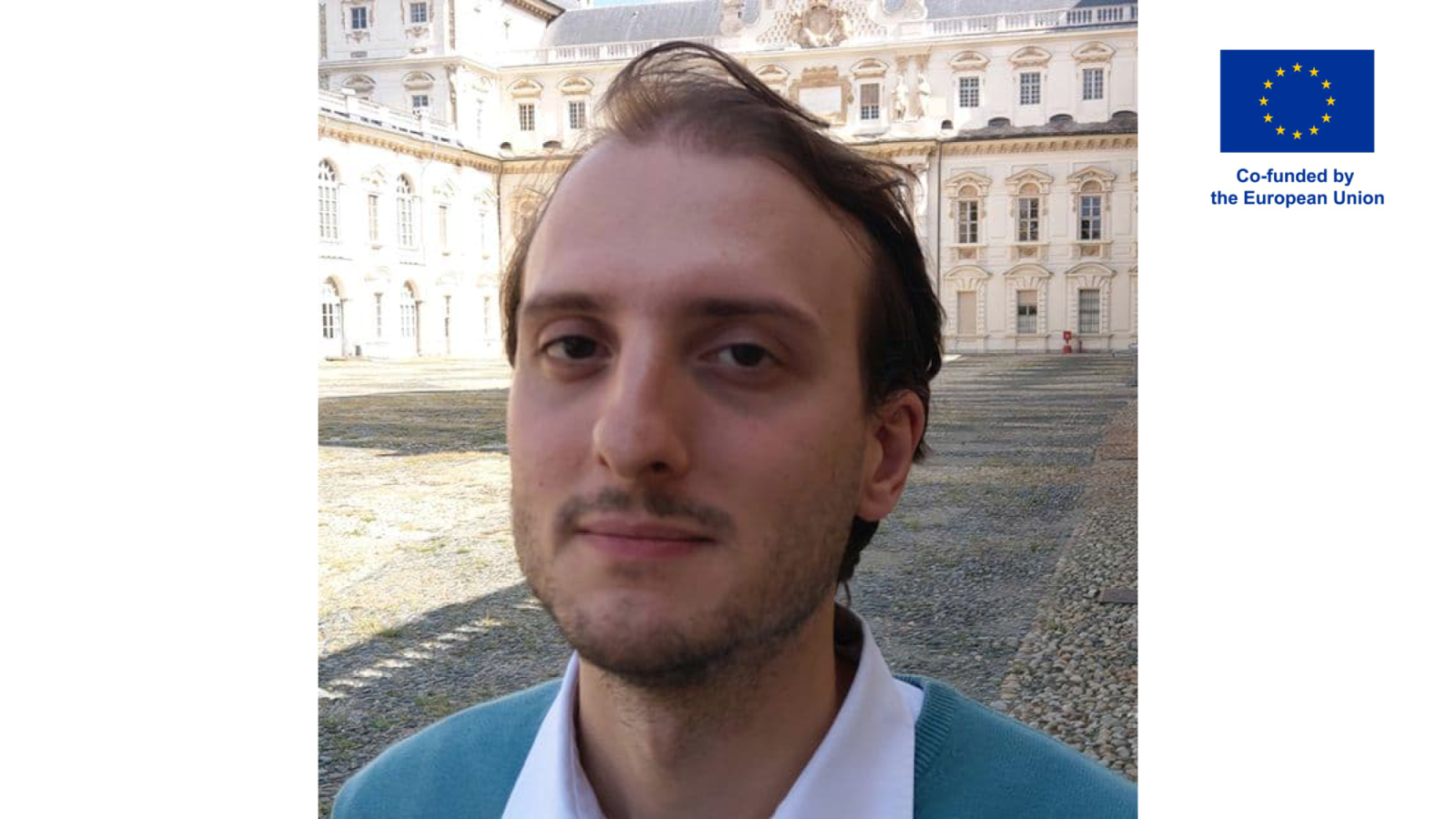
Antony Vitillo
AR/VR Expert
tonyvt@skarredghost.com
Tampere University and Häme University of Applied Sciences’ co-project Digital tools for intelligent design (SmartDesign) is funded by the European Regional Development Fund (ERDF). The Council of Tampere Region and the Regional Council of Häme granted the funding. The project is co-funded by the European Union.