
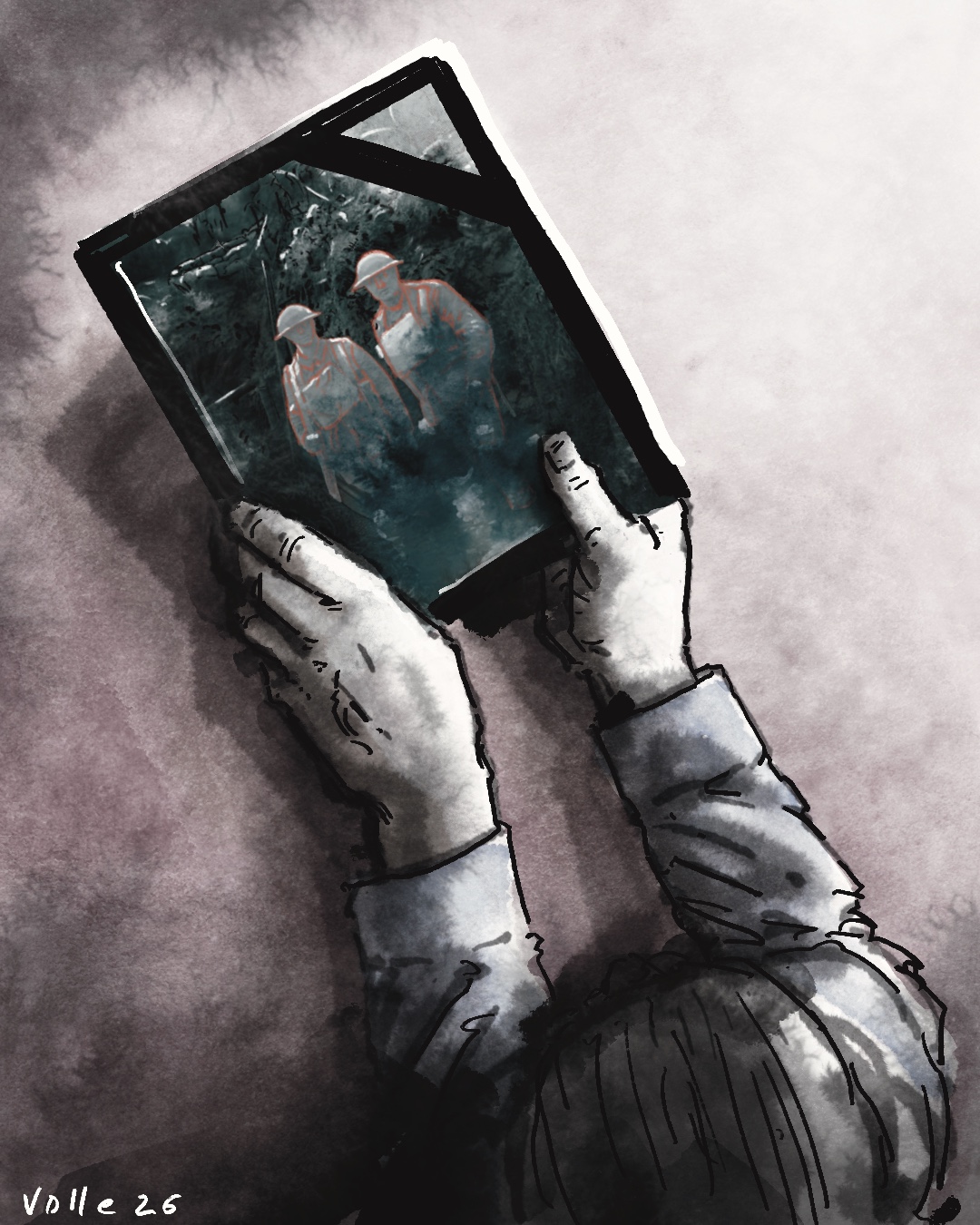
This new article by Élise Féron examines how the disappearance and reappearance of First World War soldiers continues to shape contemporary societies. While many of those who went missing were never recovered, advances in archaeology, forensic science, and historical research have led to the discovery and identification of human remains across former battlefields. Each new recovery reopens questions about memory, reconciliation, loss, and belonging, often affecting descendants, local communities, military institutions, and wider public understandings of the war.
The article argues that missing soldiers should not be understood solely as historical casualties. Their continued absence, and in some cases their eventual reappearance, creates an enduring relationship between the living and the dead. The missing occupy a unique position within collective memory: they are simultaneously part of the past and active participants in present-day commemorative practices. Their story demonstrates how the consequences of armed conflict can persist across generations, long after the guns have fallen silent.
By focusing on the ongoing discovery and identification of First World War soldiers, the article contributes to broader debates on memory, remembrance, reconciliation, closure, and the social life of human remains. It highlights the ways in which war continues to resonate through material traces, emotional connections, and public acts of commemoration. The recovery of a missing soldier is much more than an archaeological or forensic event; it is also a social and political moment that can reshape understandings of history and renew connections between past and present.
Ultimately, the article invites us to rethink what it means for a war to be “over.” As long as soldiers continue to be found, identified, and remembered, the legacy of the First World War remains an active and evolving part of contemporary society.
Read the article (open access): https://journals.sagepub.com/doi/epub/10.1177/07255136261487203