
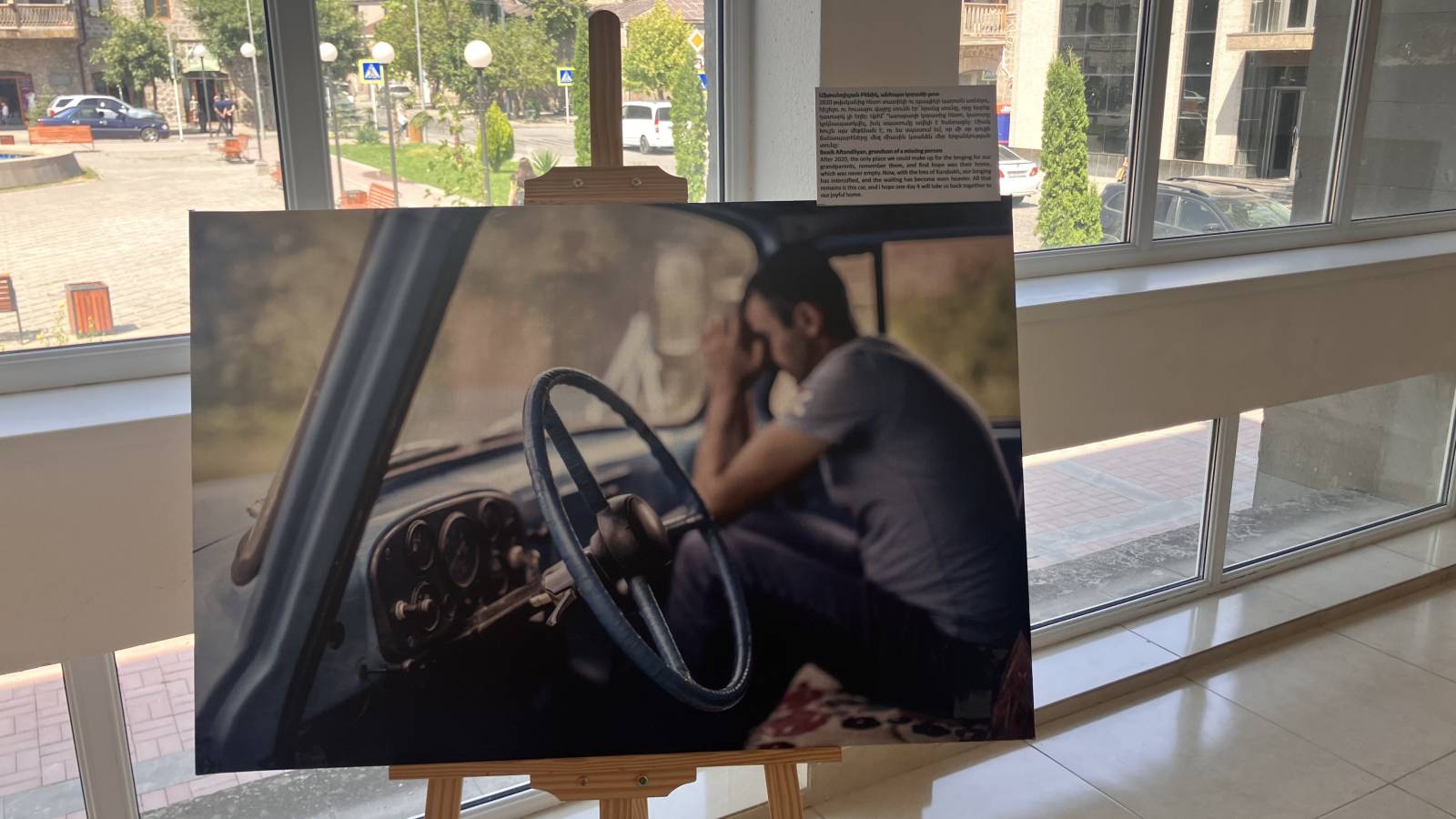
On August 29th and 30th, Re-(E)MBody researcher Anush Petrosyan joined the families of the missing in Goris and later in Yerevan, Armenia to honor and remember those whose fates remain unknown since the Nagorno-Karabakh wars.
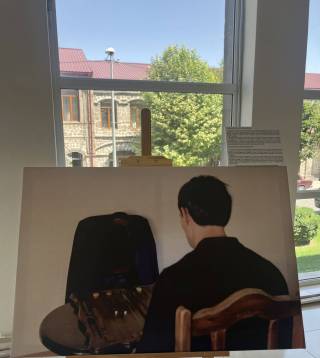
The exhibition titled Absent but Not Forgotten was organized at the Goris State Drama Theater by the International Committee of the Red Cross (ICRC). It highlighted the plight of families in the Syunik and Vayots Dzor regions who continue to struggle with the absence of their loved ones, missing since the conflicts of 2020–2023. Seventeen family stories were presented through photographs and accompanying narratives that conveyed grief, hope, and uncertainty—emotions that coexist in the daily lives of relatives of the missing. As the wife of a missing person expressed, each escalation of conflict and the emergence of new cases of disappearance revive memories and make those relive their ambiguous loss who have had missing persons in their families since 1990s. Over the years, the families of the missing have become one collective. As the wife of a missing person mentioned, when they approach agencies seeking answers, they do so not only for their own loved ones but for all members of this extended family. The pain they endure is immeasurable. As one father of a missing person said, “You can wipe away tears, but not those that flow in the heart. The tears flow through the heart into the soul destroying it with each drop.”
The event held on August 30th in Yerevan, organized by the families of the missing, aimed to raise awareness and challenge societal indifference, as parents of missing persons highlighted throughout the day. Throughout the event, they emphasized the importance of acknowledging the issue. Families shared their profound pain, describing the daily anguish since their loved ones went missing—since their phone numbers became unreachable on the battlefield, and their families entered years of uncertainty marked by ambiguous loss. They continue to wait and hope, leaving doors unlocked and lights on, believing that one day their loved ones might return and knock on the door.
Understanding that people may be hesitant to speak about the missing, the families urged others not to remain indifferent, yet remain careful with the choice of words that can renew their pain. They asked for solidarity and dialogue, encouraging even the smallest acts of support to help transform their “long night into dawn”. They recognized the shared grief of families of the missing across the globe, acknowledging the international dimension of the issue and sending a message that “peace is not a gift, it is a blessing.”
“The war of uncertain waiting is the worst kind of war,” said one parent in her concluding remarks, expressing hope that the waiting will end in victory—the kind that marks the return of their loved ones.
The event concluded with a screening of the theatrical performance Lanterns of Silence, originally initiated and financially supported by the ICRC Delegation in Armenia. Co-created with families of the missing, the performance reflects the pain and endurance of three women who have waited for their children and loved ones through decades of war, from WWII to the first and second Nagorno-Karabakh wars. It highlights the layered nature of conflict and disappearance, shedding light on the silent, enduring wait that has torn families apart.
We invite you to watch the screening of Lanterns of Silence online and to stand with the families and victims of enforced disappearances, those whom we may not know, but who often walk silently beside us: Լռության լապտերներ/Lanterns of Silence