
Erasmus+ Mobility
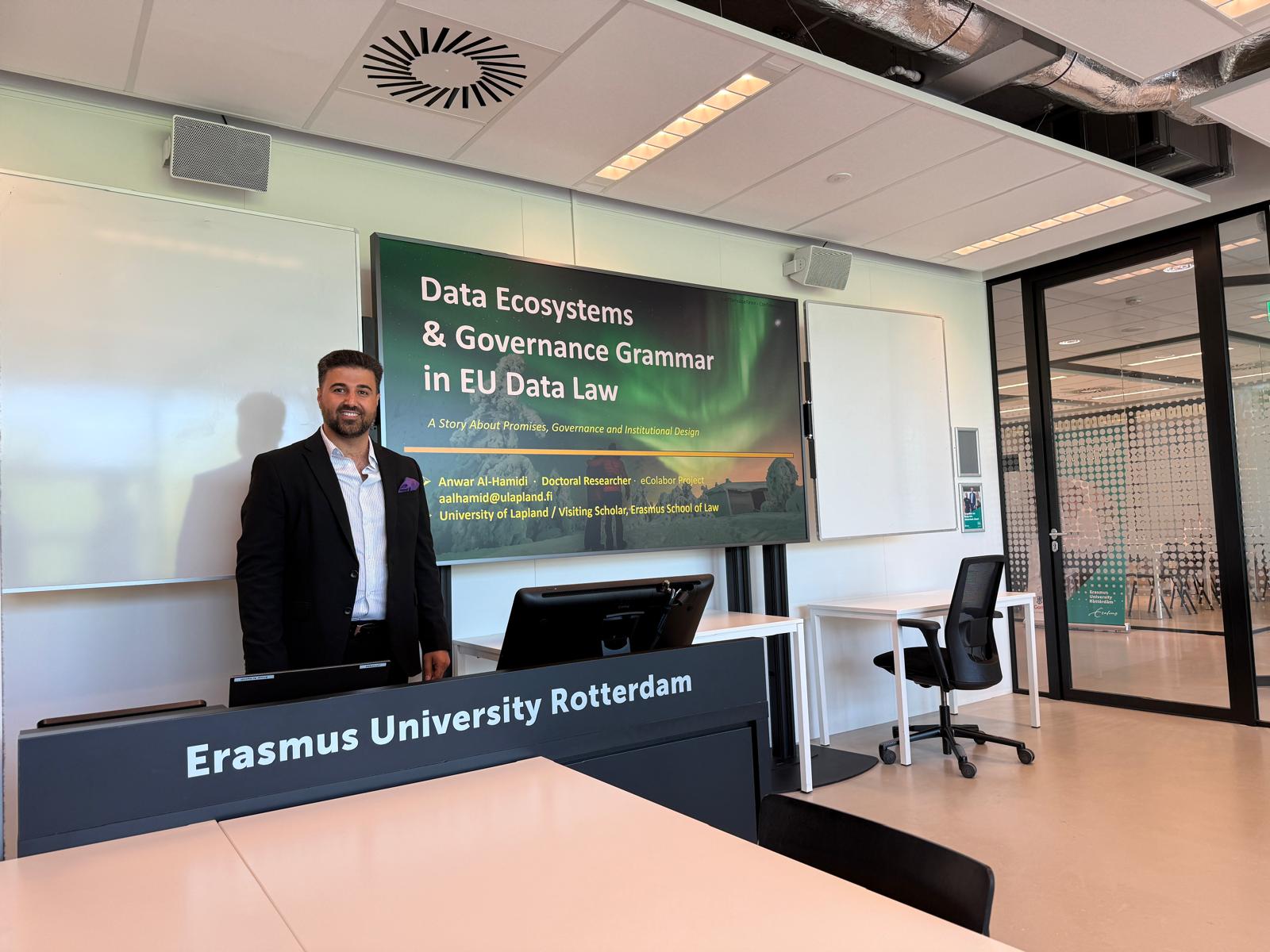
During spring and summer 2026, doctoral researcher Anwar Al‑Hamidi (University of Lapland, Faculty of Law) carried out three mobility periods, combining teaching, research collaboration and academic networking around the eColabor themes of ecosystem data governance and sustainability transitions. The research visits at the Erasmus University Rotterdam, University of Groningen, and the University of Hamburg (funded by the Erasmus+ programme) supported the development of his teaching skills and doctoral research whose aim is to propose an ecosystem data governance framework that promotes multi-stakeholder collaboration and open innovation for sustainability.
Teaching Opportunities to Educate on Data Governance for Sustainability
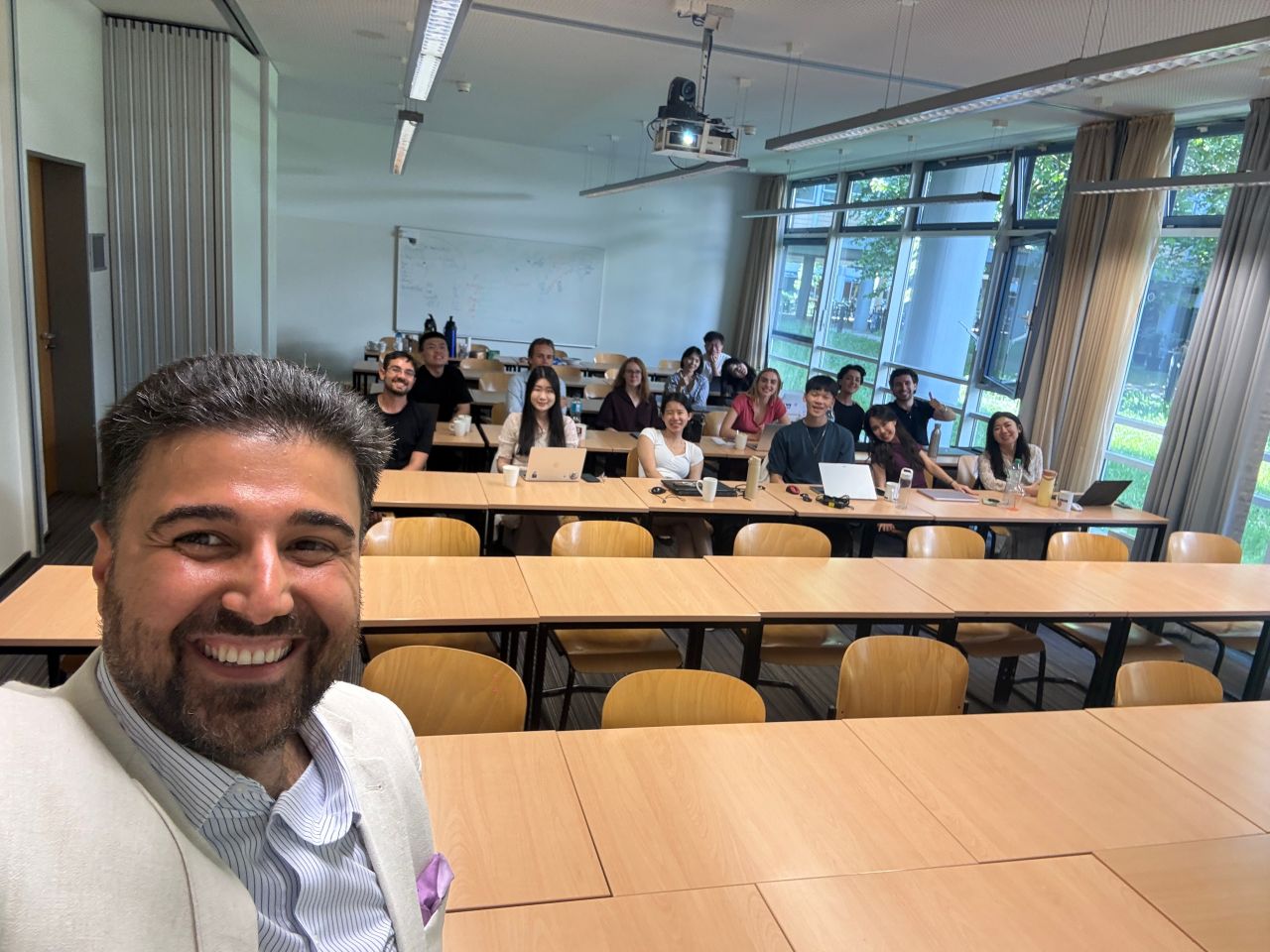
During these mobility periods, Al‑Hamidi benefited from cooperation opportunities in higher education to further develop his teaching skills, providing insights into how EU data governance frameworks shape sustainable innovation. In Groningen, he contributed to the master’s course The Law of Sustainable Technology, introducing students to regulatory approaches to sustainability transitions. These themes connect closely to eColabor’s interest in how legal rules structure cooperation and access within sustainability‑oriented ecosystems. Reflecting on his teaching experiences, Al-Hamidi declares:
‘I truly enjoyed the “reversed roles” experience. There is a unique energy in transitioning from the seat of a student to the role of a lecturer. It was a privilege to deliver a lecture on EU data governance rules for sustained multistakeholder collaboration.‘
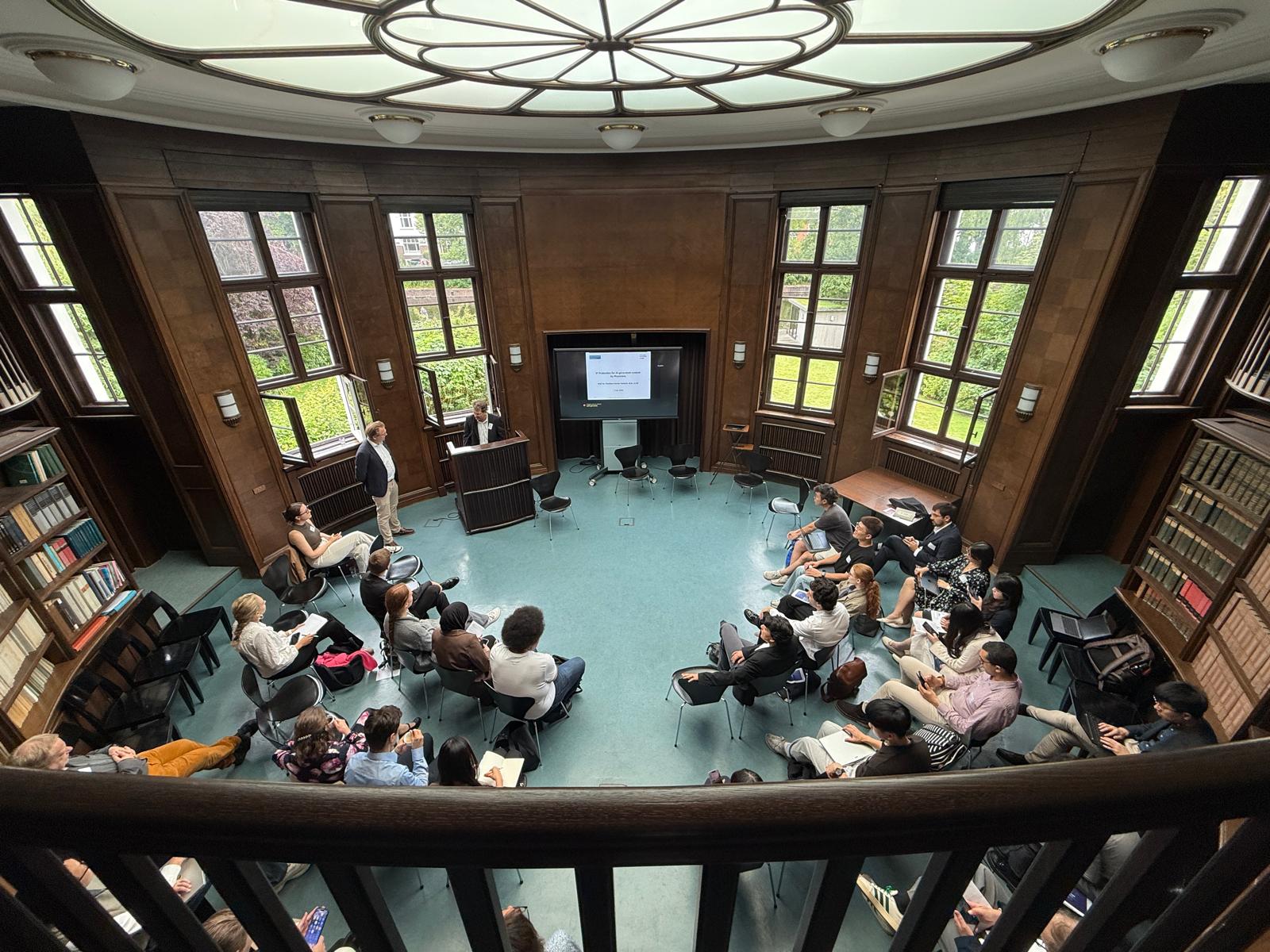
At Hamburg’s international summer school Legal Perspectives on Medical Research, Al‑Hamidi taught students from National Taiwan University and the University of Hamburg about the EU’s evolving data governance landscape — including the Data Act, Data Governance Act, Open Data Directive, GDPR and the European Health Data Space. His sessions examined how these frameworks enable safe and responsible data use in research and innovation, and how sustainability is embedded as a public‑interest goal in EU regulation. Across both universities, his teaching advanced eColabor’s mission by showing how data governance underpins multi‑actor coordination and by strengthening international networks around ecosystem‑level governance.
Benefits for eColabor’s Research Goals
The visits also directly supported Al‑Hamidi’s doctoral dissertation, offering opportunities to present his research to the Erasmus Centre for Law and Digitalisation and the Erasmus School of Law, and enabling the completion of an article to be included in his dissertation and titled ‘Regulated Self-Regulation: Governing Data Commons from the Bottom Up for Multi-Stakeholder Collaboration in EU Data Law’. He also participated in several conferences that deepened reflection on EU law and sustainability transformations, including the Law and AI Regulation conference.
Strengthening International Collaborations
The visits strengthened academic cooperation between the University of Lapland and the host universities. They also enabled him to network and identify new collaboration opportunities, including a potential return research visit to Rotterdam and the possibility of pursuing a visiting fellowship at National Taiwan University.
Summary
These visits, partly supported by the Erasmus+ programme, directly contribute to eColabor’s mission to understand and improve multi‑stakeholder governance in sustainability‑oriented ecosystems. By engaging with leading scholars and teaching emerging legal frameworks, Al‑Hamidi brings valuable insights back to the eColabor’s research community and goals.