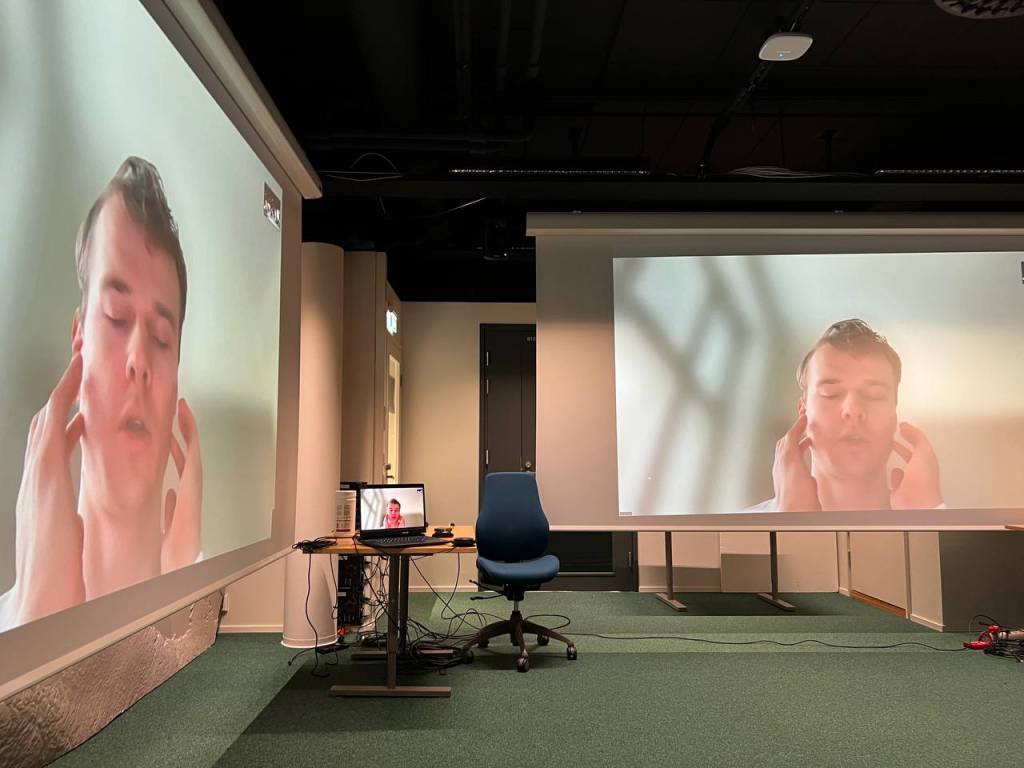
At Tampere University’s Research Day: Transformative Technologies in Performing Arts, our community had the chance to dive into bold, boundary‑pushing explorations at the intersection of performance, embodiment, and emerging digital tools.
The event, hosted by the Boundaries of Performing Research Group (TARU), opened with Jurgis Peters, who shared his ongoing doctoral work Embodied Feedback Loops. His presentation combined research insight with artistic experimentation, asking how a human performer and a generative AI system might mutually influence one another—shifting from one‑directional control to a more symmetrical, responsive dialogue. Jurgis also offered an interactive demo that invited the audience to step directly into this human–AI conversation, making the experience both thought‑provoking and delightfully hands‑on.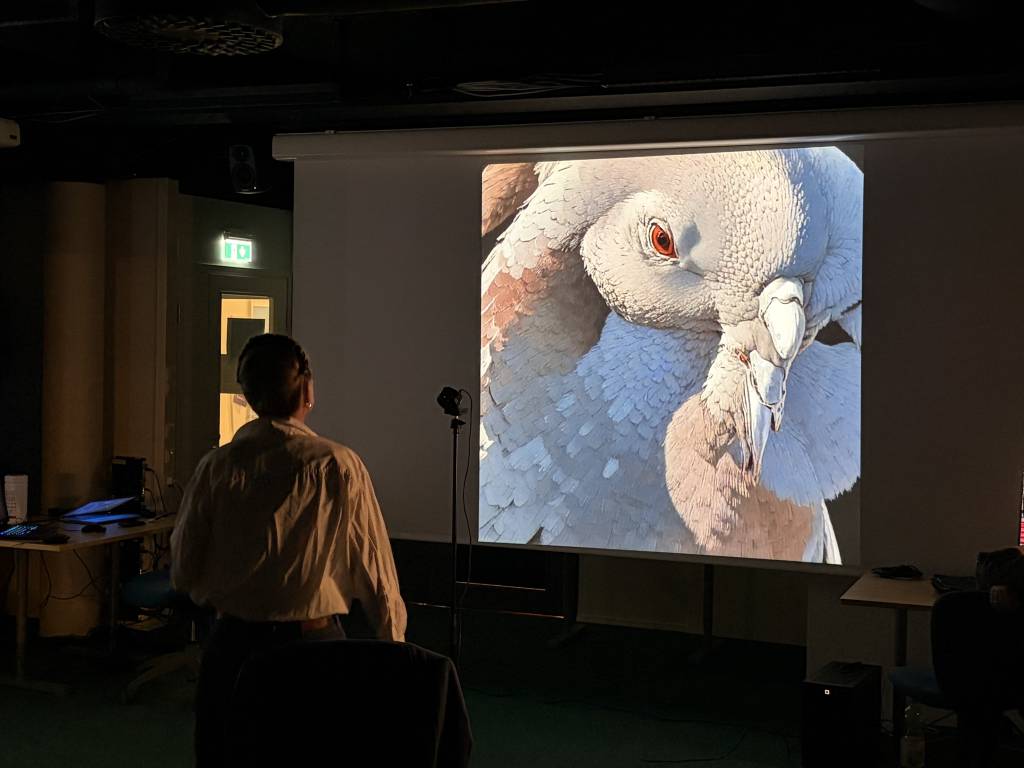
Later in the afternoon, Samuel Kujala continued this exploration of human–machine interplay with Virtual Masks, posing a deceptively simple yet powerful question: If humans can act like machines, could machines be programmed to act like humans—and what happens when the two begin to form a continuous feedback loop? His work opened up a space to rethink performance, identity, and the shifting roles of actors and algorithms. Together, Jurgis and Samuel showcased how artistic research can illuminate the evolving relationship between embodied practice and digital technology, offering glimpses into futures where performers and machines co‑create in increasingly fluid ways.