

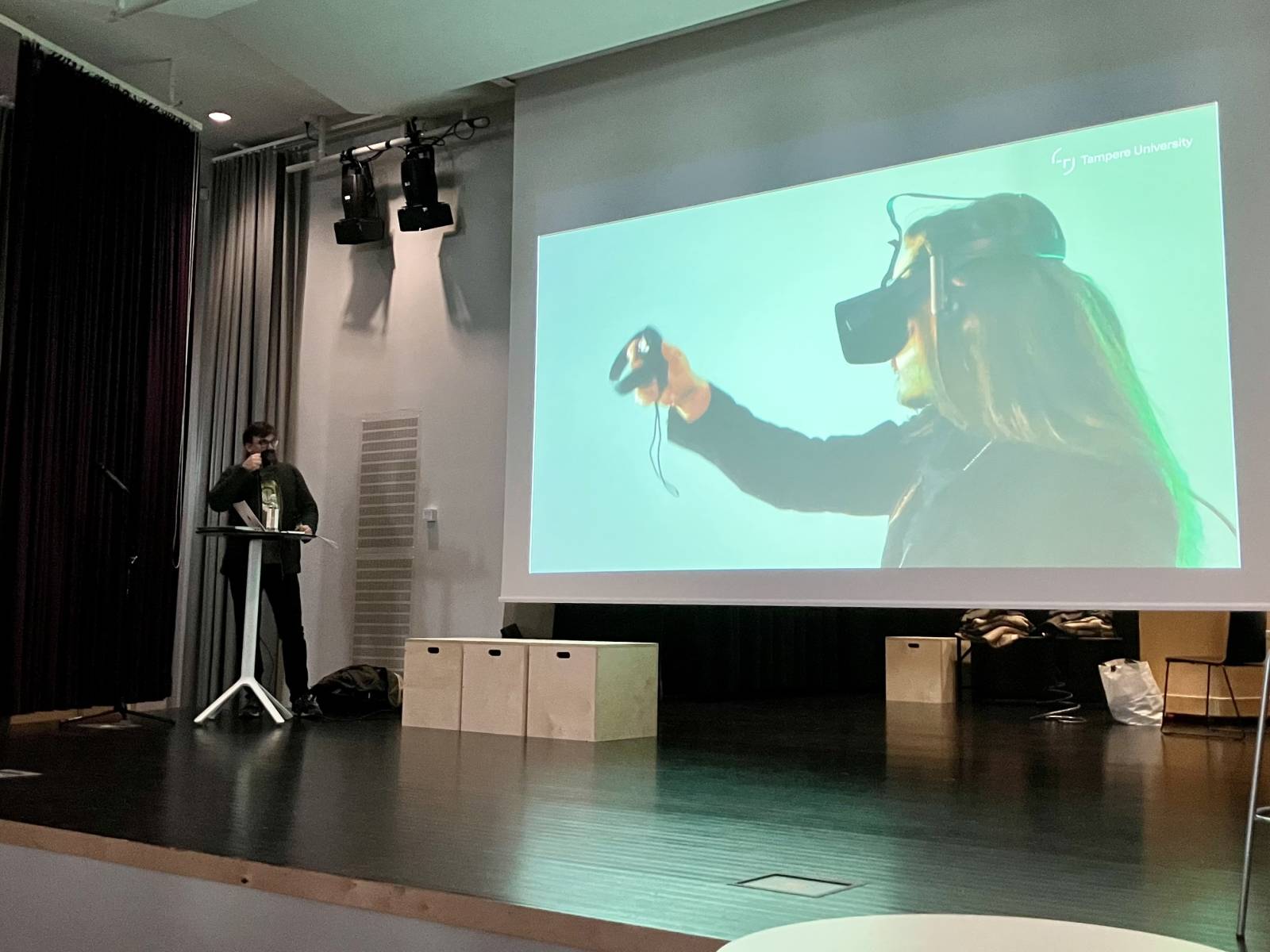
Our Coordinator, Aleksandr Ometov, recently had the opportunity to visit Linnankosken lukio in Porvoo to give a lecture on AI and the broader concerns surrounding its rapid development from human-machine convergence perspective. The event itself quickly evolved into something more dynamic: an open, technically informed, and socially aware discussion driven by the students’ questions.
The lecture covered the fundamentals of modern AI, including a short historical overview leading up to the current AI boom, followed by a discussion of where contemporary systems excel and where their limitations remain. However, the most rewarding part of the visit was not the presentation itself, but the depth and seriousness of the questions raised by the young audience.
Much of the discussion revolved around the role of AI in human development and learning. Several students raised concerns about over‑reliance on AI tools and whether excessive use could weaken independent thinking and problem‑solving skills. From an engineering perspective, this is a familiar pattern: whenever automation becomes widely available, efficiency increases, but skill distribution changes. The key question, which emerged naturally during the discussion, was not whether AI should be used, but how it should be integrated in a way that supports human cognition rather than replacing it.
Another major theme was the future of work. Questions about job displacement, workplace transformation, and new skill requirements reflected an awareness that AI systems are already reshaping professional environments. The discussion emphasized an important distinction that is sometimes lost in public debate: AI tends to automate tasks rather than entire professions. This nuance matters, because it shifts the conversation from fear of replacement toward adaptation, education, and the design of human‑AI collaboration.
Ethical considerations were woven throughout the conversation rather than confined to a separate segment. Topics such as bias in data‑driven systems, concentration of power in AI development, and the use of AI in conflict or peacebuilding contexts emerged organically from the students’ questions. The idea of AI as a “peace machine” led to a balanced discussion about the dual‑use nature of technology. The same systems that can help analyze conflicts and support communication can also be applied in surveillance or military contexts. This duality highlighted the central message of the lecture: AI systems do not act independently of human values, incentives, and governance structures.
The final part of the discussion touched on climate and sustainability. Students were clearly aware that large‑scale AI systems consume energy and resources, while at the same time offering tools for optimization, modeling, and environmental monitoring. This led to a nuanced conversation about trade‑offs, efficiency, and the importance of aligning AI development with broader sustainability goals. From an engineering standpoint, this reflects a shift from purely performance‑driven optimization toward multi‑objective design that includes environmental constraints.
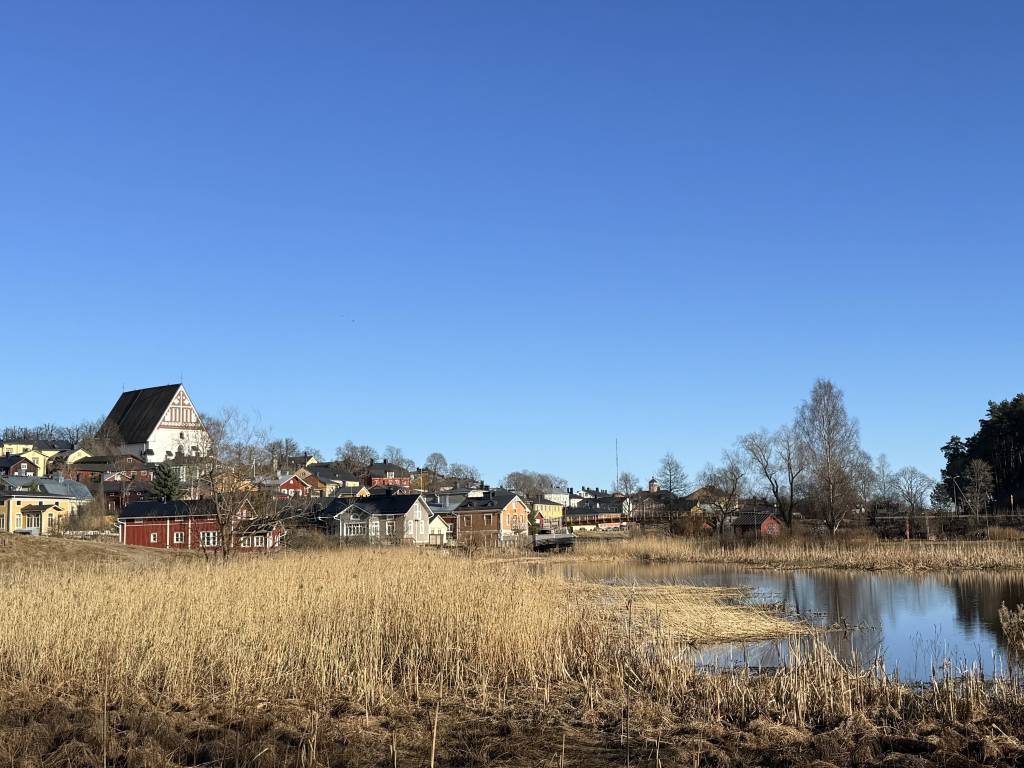
Linnankosken lukio provided an excellent environment for this kind of discussion. The atmosphere was open and respectful, making it easy to move beyond prepared material and engage directly with the students’ concerns and ideas. It is clear that the school places value on critical thinking and interdisciplinary perspectives, which are essential when dealing with technologies that affect society as broadly as AI.
If there is one takeaway from this visit, it is that young people are not merely passive recipients of AI technology. They are already thinking critically about its implications and are eager to engage with questions that combine engineering, ethics, and society. That is an encouraging sign for the future of AI – and for the future researchers, and decision‑makers who will shape it.