
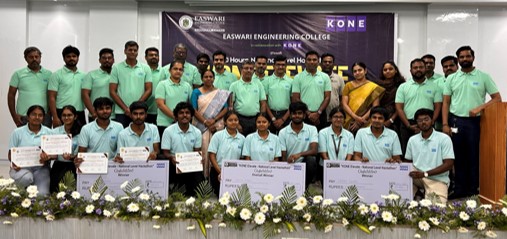
In 2025, KONE partnered with Eswari Engineering College (EEC) in Chennai, India to run a national-level hackathon. The event brought students closer to real challenges in elevators and building operations, while also supporting KONE’s wider university collaboration work under COFIRD.
Objectives of the hackathon
The hackathon had a few clear goals. First, it was a way to invite fresh ideas from students who can think differently and question the usual approach. Second, it helped KONE stay connected to new technology trends by listening to how young engineers solve problems. Third, it created a direct platform to spot strong talent for internships and future hiring. Finally, it supported employer branding—building awareness of KONE among students and making KONE more visible as a future workplace option.
Timeline
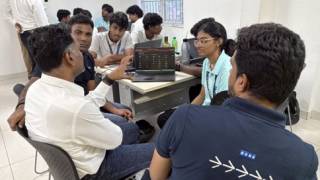
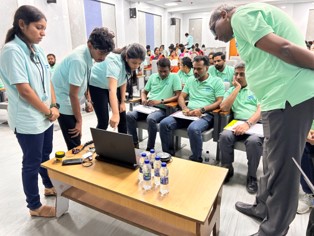
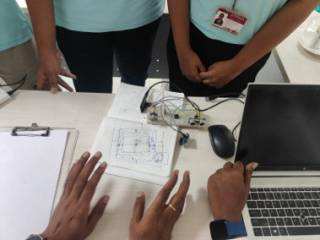
The hackathon was planned and delivered over September to November 2025 with clear steps. Early on, KONE and the university aligned on coordination, problem statements, agreements, and branding. Promotions and student outreach followed, and registrations opened in early October and closed by mid-October. Screening then took place in multiple rounds, first at the university level and then by KONE, with the Top 25 finalized by late October. In early November, shortlisted teams prepared prototypes, followed by the two-day (30-hour) hackathon in early/mid-November and a final winner felicitation after the event.
Results
The hackathon received 366 total idea submissions, showing strong interest. The shortlisting process was structured to keep quality high: EEC shortlisted ideas to 164, then 99, and KONE shortlisted the Top 25 for the hackathon. During the final stage, KONE selected the Top 10 and chose the winners from that group. The prize structure included ₹1,00,000 for the winning team and ₹50,000 each for three runner-up teams.
The work focused on three challenge areas that reflect real needs in India’s growing building market. Teams were asked to think about (1) improving the elevator experience for users so it feels more engaging and pleasant, (2) making the technician’s job safer and easier with digital support, and (3) improving building operations and safety during critical situations like equipment failures, fires, or peak traffic.
Learnings
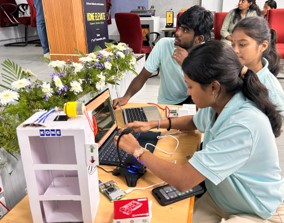
Several things worked especially well. The collaboration with the university was strong, planning was detailed, and students stayed engaged throughout the full 30 hours. The university also acted as a clear single point of contact for student communication, which helped the event run smoothly.
At the same time, the post-event review highlighted gaps. Many submissions looked similar because teams used the same online idea and writing tools early on, which reduced uniqueness. Participation was also concentrated mostly in Tamil Nadu, and only a small number of teams came from top-tier institutions. Some students were dealing with exam schedules during the final weeks, which can reduce the time and energy they can put into prototypes. There were also process lessons—branding and agreement work should move faster, and Top 10 presentations should be limited to the jury for more focused evaluation.
Recommendations
For better outcomes in future editions, the problem statements should stay high-level and explain the background clearly without telling students what to build. This encourages more original thinking. Student orientation should happen in two steps: first a simple introduction to KONE and elevator basics before submissions, and then a deeper session after shortlisting that links directly to the problem themes.
It is also recommended to schedule hackathons during June to October to avoid common exam periods. Another strong improvement is to run early virtual check-ins between KONE experts and shortlisted teams before the hackathon, so teams get practical direction early. A helpful working ratio is one expert supporting three teams, which keeps guidance meaningful without creating too much load. Finally, professors can be used as extended subject guides, which strengthens technical quality and reduces pressure on KONE’s internal experts.
Hackathon Models
A practical model for India is to run a hackathon with an anchoring university like EEC and open participation across a city, state, or the whole country. This provides broad branding reach and can be delivered in about 3–4 months, with moderate idea quality depending on mentoring depth.
A stronger model; also the recommended one; is to extend the hackathon after initial shortlisting. After selecting the Top 30 (or similar), KONE assigns dedicated experts to work closely with teams to develop the solution further before final judging. This takes longer (about 4–6 months) but improves idea quality significantly because students build with deeper real-world context and feedback.
Another scalable approach is to run a hackathon across a group of same-branded institutions (for example, a university group with multiple campuses). This can give better reach across campuses while keeping coordination manageable through one parent institution.
Summary
The KONE Hackathon India 2025 in Chennai showed that India is not only a growth market for buildings; it is also a strong market for co-creating new ideas with university talent. The event delivered high participation, a clear selection process, and valuable lessons on how to improve originality, widen national reach, reduce process delays, and strengthen mentoring. With a more guided model and deeper expert involvement after shortlisting, future hackathons can move beyond ideas and produce stronger prototypes, clearer learning, and a more consistent talent connection for KONE in India.